The Little Falls Historical Society Museum

Vietnam War Exhibit

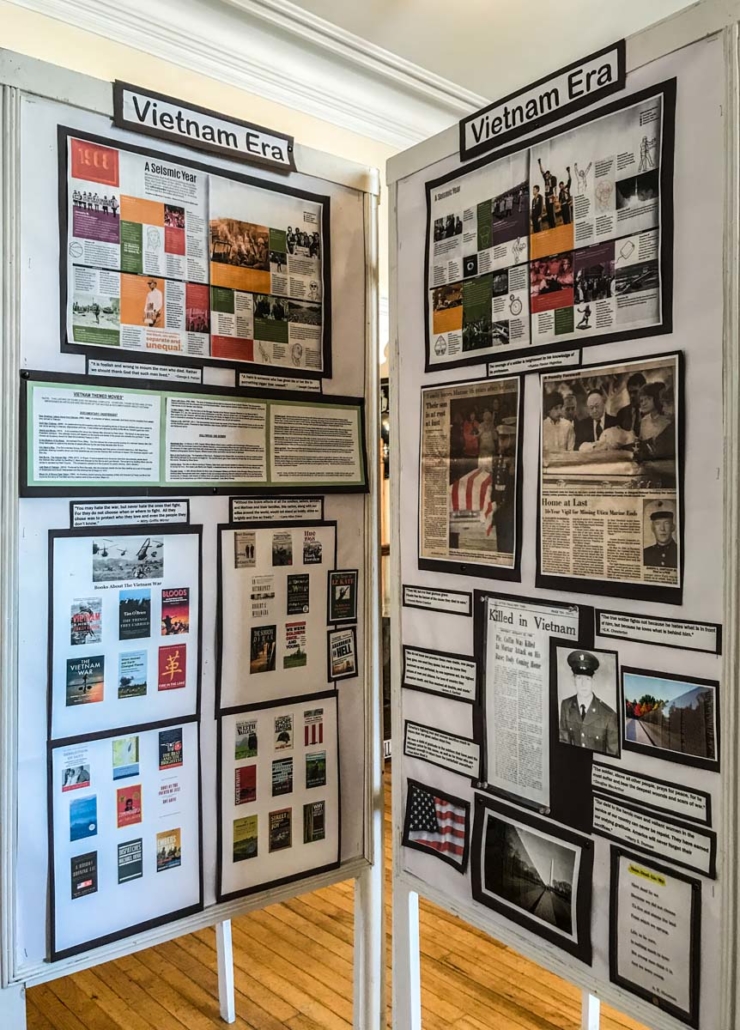
The Vietnam War Exhibit features a selection of memorabilia and collections to remember the 136 Little Falls service members who fought in the Vietnam War. Browse our Vietnam war era photos, letters, displays, wall exhibits, and more, to understand the impact on local service members and their families.

Vietnam War Era Writing Series

Click on the author and title below to read the writing series articles.

SCHUYLER VAN HORN: Christmas of 1971 in Vietnam — A veteran’s remembrance

Recently, we celebrated the 100th anniversary of the end of the Great War. One of the stories was of British and German troops peacefully playing soccer and singing carols on Christmas day in front of their trenches — and the next day going back to the business of killing each other.

I was privileged to have my Hobart College 50th reunion this past summer. I had the opportunity to get together with some of my 1968 classmates who served in Vietnam. In thinking about our discussions I noted a symmetry in our experiences at Christmas with those of our deceased World War I veterans. After all, most Vietnam veterans are now in our 70s or 80s and perhaps not long for this mortal coil.

As a young man growing up in Little Falls, New York in the 1950s and ‘60s I fondly remember the parades on Memorial and Independence days where the local veterans would march and be honored.

MICHAEL J. MALAVASIC: One war of many experiences

The Vietnam War was for many baby boomers the most important event of their lives. Some 2.7 million men and women served in country, and each one had a different series of experiences. Some served in combat, while others maintained the machinery of war, which is required to keep men in combat. The goal of all the fighting, fixing and serving was to accomplish the American “mission.” While doing so, some 58,000 comrades died, several hundred thousand soldiers were wounded, and many of those carry the effects of their injuries to this day. Of the 2,700,000 who served, it has been estimated that around 850,000 are still alive.

Even though each veteran’s experiences were different, there was a commonality to the Vietnam experience. The first and most important common experience was that you put your emotions in a mental box, locked it up, and did not open it again until you left country. Some veterans still have not opened theirs. Emotions cause problems in a war zone, just as suppressed emotions do after a war.

JOHN FRAZIER: Determination, strength and courage

Joseph Stanley “Stash” Zawtocki, Jr. was a man of determination, strength and courage. The first child of Stan and Jennie Zawtocki, Stash was literally born into the U.S. Armed Services on May 16, 1946 in Charleroi, Belgium, while his father was still serving in the U.S. Army Air Corps.

Stan and Jennie owned and operated the Imperial Restaurant on West Main Street in Little Falls, and spent countless hours, seven days a week, working at the business. As the only son and eldest child, Stash bore much of the responsibility of caring for his younger sisters Patty and Donna. A third sister, Tina, was born shortly before Stash left for Vietnam; she was the sister that he hardly knew. It was through his willingness to face these responsibilities that Stash developed his determination. He knew what had to be done, and he did it.

TED FELDMEIER: Reflections by one Vietnam combat veteran

After returning from Vietnam and leaving Army active duty, the main thought I had was gratitude, not only to be alive, but also without any disabling wounds. Some of my infantry peers were not so fortunate (e.g. Agent Orange, PTSD, serious wounds and worse). Simultaneously, the popular song “Yellow River” by Christie in July 1970 hit the U.S. Billboard chart. Its lyrics largely describe how I felt then.

People in Little Falls greeted my return home warmly. Virtually no one called me a “baby killer” nor other denigrating terms, treatment that some Vietnam veterans unfortunately received. However, a number of young people in Little Falls did say to me that had they been in my pre-draft situation, they would have attempted to avoid military service.

JOHN FRAZIER: The 1968 Tet Offensive — 50 Years Ago

January 30 marks the 50th anniversary of what has become to be known as the Tet Offensive, the North Vietnamese (NVA) plan to launch a coordinated assault against major cities and military installations in South Vietnam. It was Lunar New Year, a popular holiday for the Vietnamese, and a ceasefire was traditionally observed; Communist forces broke that tradition in 1968.

Thirty-six of the forty-four provincial capitals, and five major South Vietnamese cities came under attack during the Tet Offensive and it became the largest military operation in the war up to that point. Although it became a military victory for American and South Vietnamese forces, Tet also had a huge psychological impact on the American public. Tet was the ambitious plan of Le Duan, General Secretary of the Communist Party in North Vietnam. His vision was that South Vietnamese soldiers (ARVN) would desert, South Vietnamese citizens would overthrow the Saigon government and American forces would withdraw from Vietnam.

BERNARD SPRAKER: We cannot forget, we can forgive

The Vietnam War was the first “television war” — the news media brought the graphic brutality of war into people’s living rooms almost nightly. When the My Lai Massacre of 1968 was made public, Americans were horrified to see that their “boys” could commit such an atrocity. Our soldiers were angered and frustrated when they learned that the people they were risking their lives for were actually aiding and abetting the Viet Cong. Males and females of all ages were slaughtered.

The phrase “war is hell” is an understatement. If you have never walked a mile in a combat soldier’s boots, you don’t know the emotional trauma and stress this man has endured. There were atrocities committed by both sides. The horrible inhumane treatment of American POWs is well known — what is not known is what happened to the MIAs which might stand for “Murdered In Asia.”

Click on the author and title below to read the full text of their written work.

Recently, we celebrated the 100th anniversary of the end of the Great War. One of the stories was of British and German troops peacefully playing soccer and singing carols on Christmas day in front of their trenches — and the next day going back to the business of killing each other.
I was privileged to have my Hobart College 50th reunion this past summer. I had the opportunity to get together with some of my 1968 classmates who served in Vietnam. In thinking about our discussions I noted a symmetry in our experiences at Christmas with those of our deceased World War I veterans. After all, most Vietnam veterans are now in our 70s or 80s and perhaps not long for this mortal coil.

As a young man growing up in Little Falls, New York in the 1950s and ‘60s I fondly remember the parades on Memorial and Independence days where the local veterans would march and be honored.

I specifically remember the WWI veterans, who by the ‘60s were old and infirm, riding in convertibles, while the WWII veterans, somewhat paunchy and balding, marched with flags and rifles. Most recently I have attended parades where the Vietnam veterans are riding in convertibles and the Desert Storm and Afghanistan veterans, somewhat portly also, march with rifles and flags.
I was drafted into the Army the day after I graduated from Hobart. My story is not unlike others — in fact Mike Hanna, a fellow classmate and retired Hobart athletic director, met the same fate.

In the summer of 1971 I arrived at “Love Compound,” occupied by 31 other American souls, in An Loc, Binh Long province, 70 miles north of Saigon, near the Cambodian border, on Highway 13, the “highway of tears.” The place was notable for the French rubber plantations. Two thousand ARVN soldiers were next to our compound. The nearest handful of Americans was 20 miles away at a place called Lai Khe, commonly known as “rocket city.”

An Loc was a provincial capital with about 15,000 occupants. Because of the rubber plantations there was a heavy French presence, which included religion. Most of the inhabitants were Roman Catholic, whereas Vietnam in general was Buddhist. There were several Catholic churches dotting the countryside and even a civilian hospital staffed by French nuns.

Christmas away from my family and in a foreign country at war was perhaps the low point of my life.

But because of the Catholic influence in An Loc there were some interesting things that grabbed my attention.

On Christmas Eve day in 1971 I attended a parade in downtown An Loc. It was a Christmas parade celebrating the birth of the baby Jesus. The parade consisted of military vehicles complete with nativity scenes and carolers, all surrounded by dragon heads and fire-breathing beasts. It was somewhat jarring to see, but a melding of many cultures, customs and religions.

The day before, as the American provincial intelligence officer, I had the privilege of briefing the commander of the 11th Armored Cavalry Regiment (11th ACR) about the military situation in my province and in Cambodia. The 11th ACR was on its way to a three-week mission in Cambodia — clandestine of course — slated to start on Christmas Day.

So it was an eventful three days. The briefing on the 23rd, the parade on the 24th, and on Christmas Day watching the 11th ACR (known as the Black Horses) rumble and thunder through An Loc. It took a few hours for the thousands of men, hundreds of tanks, APCs, and motorized howitzers with helicopters roaring overhead to go by Love compound. I remember climbing up the berm of our compound, sitting there in my Bermuda shorts, t-shirt and shower clogs, in a broken down lawn chair, watching the scene unfold.

There was a truce in An Loc that Christmas day. Nobody died in combat that day. However, the next day it was back to business as usual. Just like WWI.

Schuyler Van Horn was born in Little Falls. He graduated from Hobart College in 1968 and was in the Army from 1968 to 1972, serving a tour in Vietnam before being discharged as a captain. He attended Albany Law School, began practicing law in Geneva in 1976 and retired in 2013. He and his wife Carol Van Horn have two adult children.

Dec 23, 2018

The Vietnam War was for many baby boomers the most important event of their lives. Some 2.7 million men and women served in country, and each one had a different series of experiences. Some served in combat, while others maintained the machinery of war, which is required to keep men in combat. The goal of all the fighting, fixing and serving was to accomplish the American “mission.” While doing so, some 58,000 comrades died, several hundred thousand soldiers were wounded, and many of those carry the effects of their injuries to this day. Of the 2,700,000 who served, it has been estimated that around 850,000 are still alive.

Even though each veteran’s experiences were different, there was a commonality to the Vietnam experience. The first and most important common experience was that you put your emotions in a mental box, locked it up, and did not open it again until you left country. Some veterans still have not opened theirs. Emotions cause problems in a war zone, just as suppressed emotions do after a war.

For the most part, transportation to and from Vietnam was by airplane (the great silver bird).

When the bird left the states, the heroics of John Wayne and Rambo were front and center in many minds and voices. When the plane landed, the heroics were AWOL, and the voices silent. Upon landing in Nam, the airplane’s door was opened. Your first exposure to Nam was a wave of muggy heat and the SMELL of rotten vegetation that almost overwhelmed you. One hour later one no longer smelled the rot.

When I arrived in Vietnam, I thought I was scared. After all I was in a war zone and expected imminent attack or something; I knew this was a war zone. When you arrive in a war zone you do not know enough to know when to be scared or when to grab another beer. From the airport, we went to the replacement depot (Repo-Depot), a place that should be used only to punish child molesters.

After enduring the Purgatory of the Repo-Depot, you arrived at your unit, and if you were among the 7/8 soldiers who were in the rear, spent the next year doing your job 12 hours a day, 7 days a week. Yes, there was down time, an occasional weekend in Saigon, a rest and recreation leave half way through your tour, the occasional day off. Sometimes the 12-hour day ended up being 48 hours, but you got your job done.

That was the rear, I never got to the field. From what I hear it was not as pleasant. During that year you experienced the dust, the heat of the dry season, the unbelievable rainfall of the rainy season, and the Vietnam people. Those good, bad, friendly and hostile people, who are like all other people.

Eventually, you got short and your tour ended. You then processed out and boarded the freedom bird. The noise level when the freedom bird’s wheels left the ground was awesome, and comforting; it was over. Many guys got an early out if they were going back to school or were close to the end to their enlistments. Some guys went back to duties in the states. It was a shock from what I hear. One of the few good things about Nam was that the level of chicken—- that is pervasive in the military, particularly in the states, was at a minimum.

Getting back home, after over a year in a “non-loving environment” was a big shock. I stayed home for two days, then left to visit an uncle in South Carolina, because I could not handle all the love that my family bestowed on me. It took a month at my uncle’s home to decompress, and to feel and act like a person again. Other guys did not have access to my Uncle Robert’s supportive environment.

Of my many experiences in Nam, two stand out; one funny and one tragic and bittersweet.

The one truly funny experience that stands out occurred one evening in Phu Bai when I was walking to work. As I walked to work, I heard someone, it turned out to be John Frazier, calling my name and saying unprintable words. He was giving me a friendly greeting. Small world. “Holy Gumdrops, John Frazier, what the (expletive deleted) are you doing here?”

The other is not funny. About two years before I deployed to Nam, and before I went to Germany as a tank crewman, I was home on leave from an infantry outfit that I had been shoved into. I ran into Stan Zawtocki at the old Dandee Donuts. We spent several hours talking, drinking coffee, and eating donuts. We were both headed for the Nam as grunts, Stan for his second tour with the USMC, and me as an infantryman in the 5/46th Infantry.

Luckily, I transferred out of that infantry, served my time in Germany, the states and Nam, and came home to a life, school, Kathy, my wonderful wife, and the time to write this article.

Stan will always exist for me as that happy, courageous, smiling friend with whom I drank coffee and talked, as one comrade to another. Stan’s name, but not my memories of him, can be found on Panel 38E, Line 42 on the Vietnam Veteran’s Memorial in Washington, D.C. God damn that useless war.

Finally, there is one other common experience that all 2.7 million Vietnam Veterans have had. Everyone who served in Vietnam was exposed to toxic levels of dioxins, the effects of which vary from veteran to veteran. Today, the Vietnam veterans, their children and grandchildren are still suffering from dioxin poisoning. This is an experience, like Post Traumatic Stress Disorder, that will not go away.

Michael J. Malavasic, Ph.D., is a resident of Sudbury, Massachusetts. He wrote this for the Little Falls Historical Society.

Joseph Stanley “Stash” Zawtocki, Jr. was a man of determination, strength and courage. The first child of Stan and Jennie Zawtocki, Stash was literally born into the U.S. Armed Services on May 16, 1946 in Charleroi, Belgium, while his father was still serving in the U.S. Army Air Corps.

Stan and Jennie owned and operated the Imperial Restaurant on West Main Street in Little Falls, and spent countless hours, seven days a week, working at the business. As the only son and eldest child, Stash bore much of the responsibility of caring for his younger sisters Patty and Donna. A third sister, Tina, was born shortly before Stash left for Vietnam; she was the sister that he hardly knew. It was through his willingness to face these responsibilities that Stash developed his determination. He knew what had to be done, and he did it.

With the free time that he had, Stash enjoyed playing Little League baseball for the Elks team, and later playing football for Little Falls High. He liked to hang out with the Furnace Street gang, and being outdoors, hunting, fishing, hiking, swimming or canoeing. Being physically active developed his strength.

It was because of his determination and strength that Stash enlisted in the Marine Corps and volunteered for duty in Vietnam. The U.S. policy at the time was to prevent the spread of communism in Southeast Asia, and nobody pushed around Stash Zawtocki or his country. One tour of duty in Vietnam wasn’t enough. Disregarding the pleas of his family, he returned for a second tour. “Don’t worry,” he said. “They need me. The communists must be stopped” No more needs to be said of his courage.

Stash was assigned to the Third Marine Amphibious Force. On the morning of Feb. 8, 1968, just nine days after the beginning of Tet, he and 23 others were on patrol just south of Da Nang when they were ambushed by a company from the North Vietnamese Army. Seventeen were killed and five were wounded. Stash and Dennis Hammond from Detroit were taken prisoner.

Stash spent 22 months in various POW camps in the jungles of South Vietnam. The treatment of the prisoners was beyond cruel. They were beaten and tortured. At times their subsistence was less than one cup of rice a day. They suffered from beriberi, malaria, dysentery and other ailments because of their poor diets and unhealthy living conditions, and were left to wallow in their own excrement. Although one of the POW’s was a physician, he wasn’t allowed to practice medicine. Medical help from the Vietnamese was denied until the prisoners were almost dead, and by then it was usually too late. The Vietnamese wanted to save their medications for themselves, and not waste it on the “war criminals.”

Stash did what he could to help lift the spirits of his fellow prisoners. One of his fellow prisoners said, “while captured, he not only behaved extremely honorably but was a model of cheerfulness and good humor under the most difficult and harrowing circumstances … and he worked very hard at providing for the rest of us and doing his best to increase all of our chances of survival.” But on Christmas Eve of 1969, after 22 months of this agonizing ordeal, Stash Zawtocki passed away of malnutrition in the jungles of Vietnam. One of his fellow prisoners stated, “When he died, it was a terribly sad day for all of us.”

His determination and courage were still there, but the enemy had deprived him of his strength.

The Zawtocki family wouldn’t learn of Stash’s fate for another four years, when the POWs returning during Operation Homecoming could confirm his death. Stash’s remains were never returned to U.S. soil until July 1985, as the Vietnamese government was using the POW/MIA issue as leverage at the bargaining table for financial compensation. Finally, on Nov. 12, 1985, the day after Veterans Day, Joseph Stanley Zawtocki, Jr. was laid to rest in Section 69 of Arlington National Cemetery. His father Stan had said, “We thought this (Arlington) was the proper place — among the boys who died the way he died, fighting for his country.”

The Zawtockis had waited for 17 tormenting years, but finally their hero was home at last.

Marine SSgt. Zawtocki was awarded the POW Medal, the Purple Heart, the National Defense Medal, the Vietnam Service medal, the Vietnam Campaign medal and the Combat Action ribbon in recognition of his service to his country.

John Frazier wrote this for the Little Falls Historical Society.
My name is Ted Feldmeier. I served as a U.S. Army infantryman in Vietnam from December 1968 to June 1970. My two tours were one year in combat, plus six months in Saigon working with the military police. I am writing this article to share the constant thoughts I had before, during and after my time in Vietnam. I’ll leave “war stories” to other veterans. I returned to Little Falls in July 1970.

In early 1968, I realized that I was about to be drafted into the Army. I also felt strongly that the U.S. involvement in the Vietnam War was wrong. I was not sure what to do. I had three choices:

‒ Be drafted for only two years of Army active duty.

‒ Enlist for a minimum of three to four years (six years reserve) and choose a relatively safe military noncombat occupation.

‒ Deliberately fail the military pre-induction physical, thereby avoiding military service altogether. I was privy to several methods of doing this.

After much thought, I rejected the draft dodging idea. I had to consider my father’s service as a fighter pilot in World War II and the Korean War. Consequently, I did not feel good about possibly reneging on my service obligation. So I opted to be drafted. This meant I would likely be trained as an infantryman. Likely to be sent to Vietnam, I then had a one in 10 chance of being killed there. However, my biggest fear was being seriously wounded and disabled. That trepidation dogged me before and during my combat time in Vietnam.

Taking chances with the draft, I had one recurring notion that combat infantrymen in Nam would see some extremely atrocious battle carnage. So I braced myself mentally for the “hell on earth” of war.

Also, as bad as any combat experience can be, I couldn’t dismiss comparing a Vietnam infantry tour with what earlier U.S. soldiers endured in Korea and World War II.

‒ In World War II, a U.S. soldier’s duty time was for the uncertain duration of the war. In Vietnam, however, the required tour was only for one year.

‒ In Vietnam, soldiers did not have to endure bitter cold, unlike in winters during the Korean Ward and in the European theatre of World War II.

‒ In Vietnam, medical care was much improved. This was due to swifter medevac retrievals and more advanced emergency treatments.

‒ Needed supplies by U.S. combat troops were obtained more quickly than in earlier wars.

Thus, I kept comparing Vietnam duty to tougher earlier war situations that U.S. troops endured. This helped me to stay relatively levelheaded during my combat year there.

Finally, and frequently, before and during my Vietnam deployment, I thought of the extreme hardship that the Vietnamese had suffered. They had withstood the Japanese invasion during World War II, the French-Viet Minh War from 1946 to 1954, repressive, corrupt dictatorships and then the U.S. war there. In contrast, the U.S. had not had a war on its soil since our Civil War. How fortunate I felt the U.S. was.

After returning from Vietnam and leaving Army active duty, the main thought I had was gratitude, not only to be alive, but also without any disabling wounds. Some of my infantry peers were not so fortunate (e.g. Agent Orange, PTSD, serious wounds and worse). Simultaneously, the popular song “Yellow River” by Christie in July 1970 hit the U.S. Billboard chart. Its lyrics largely describe how I felt then.

People in Little Falls greeted my return home warmly. Virtually no one called me a “baby killer” nor other denigrating terms, treatment that some Vietnam veterans unfortunately received. However, a number of young people in Little Falls did say to me that had they been in my pre-draft situation, they would have attempted to avoid military service.

Furthermore, the return home greeting Vietnam veterans received depended largely on where they returned to. A reception in a small town, populated by older veterans of Korea and World War II, their relatives and the Vietnam veterans’ friends growing up, could be a warm one. In contrast, the anonymity of a larger urban locale frequently created a cold and hostile return home environment.

Lastly, I am sorry the Vietnam War occurred. Aside from all the lives needlessly lost, our use of Agent Orange in Vietnam has resulted in very high cancer rates to this day in Vietnam. I feel bad about that. However, I personally feel lucky to have avoided PTSD or Agent Orange health problems. I am very grateful for that good fortune during and after my tours.

Former Little Falls resident Ted Feldmeier is a Vietnam War veteran who now resides with his wife Joan in Eliot, Maine. He wrote this for the Little Falls Historical Society.

The war in Vietnam was the first to be televised into every American home. Every night, Americans would view scenes of death and destruction taking place half-way around the world and beamed right into their living rooms. An occasional news situation update by President Lyndon Johnson, Defense Secretary Robert McNamara, or General William Westmoreland, Commander of the Military Assistance Command in Vietnam (MACV), would tell us how we were making progress and winning the war.

Meanwhile, civil rights riots had broken out in Detroit, Newark and many other American cities in the summer of 1967. Martin Luther King, Jr. had denounced the war. Huge anti-war marches were taking place all over the country. There were 485,600 American troops in Vietnam in the beginning of 1968, yet Gen. Westmoreland said he needed more to win the war. The Sixties weren’t all peace and love. This was part of America’s political climate in early 1968.

January 30 marks the 50th anniversary of what has become to be known as the Tet Offensive, the North Vietnamese (NVA) plan to launch a coordinated assault against major cities and military installations in South Vietnam. It was Lunar New Year, a popular holiday for the Vietnamese, and a ceasefire was traditionally observed; Communist forces broke that tradition in 1968.

Thirty-six of the forty-four provincial capitals, and five major South Vietnamese cities came under attack during the Tet Offensive and it became the largest military operation in the war up to that point. Although it became a military victory for American and South Vietnamese forces, Tet also had a huge psychological impact on the American public. Tet was the ambitious plan of Le Duan, General Secretary of the Communist Party in North Vietnam. His vision was that South Vietnamese soldiers (ARVN) would desert, South Vietnamese citizens would overthrow the Saigon government and American forces would withdraw from Vietnam.

Prior to Tet, on Jan. 21, the North Vietnamese attacked Khe Sanh, an isolated American military position six miles west of Laos and 10 miles south of the Demilitarized Zone (DMZ) that divided North and South Vietnam. It was a great diversionary tactic by the NVA, drawing manpower and munitions away from other vital areas for the upcoming Tet Offensive. It would become the longest battle of the Vietnam War. Surrounded by 30,000 North Vietnamese troops, the 6,000 Marine, Army and ARVN troops at Khe Sanh were besieged for seventy-seven days, taking a constant artillery and mortar pounding. Gen. Westmoreland sent massive air support to re-supply the beleaguered American troops and began enormous air strikes on enemy positions — over 100,000 tons of bombs. Westmoreland ordered the First Cavalry Division to undertake Operation Pegasus to provide relief for the Marines at Khe Sanh. By the end of the siege, 730 U.S. troops were killed in action and 2,642 were wounded. The base was abandoned less than six months later.

Fortunately for Westmoreland, he heeded the advice of Lt. General Frederick Weyand, Commander of III Corps., whose command included Saigon. With the invasion of Khe Sanh, Westmoreland wanted to send 250,000 troops to defend the outpost and crush the NVA. General Weyand, disturbed by intelligence reports and previous patterns of activity, convinced Westmoreland to instead keep over half of those troops in tactical positions throughout the country.

Whether due to confusion or poor communication, some Communist attacks on I Corps and II Corps began shortly after midnight on Jan. 30., the day before the Lunar New Year; most of the Tet Offensive attacks began the following day.

The battle in Saigon gained most notoriety, in part because the Presidential Palace and the U.S. Embassy itself were attacked. Communist forces blew a hole in the Embassy wall and occupied the building for six hours until being killed or captured by American Army military police. Two Viet Cong battalions attacked the U.S. logistical and headquarters complex at Long Binh, just outside the city and another Communist battalion struck Bien Hoa air base, while Tan Son Nhut Air Base, in the northwestern part of the city, was attacked by three battalions. The Viet Cong had been provided with blacklists of South Vietnamese government officials and ARVN military officers and they began to execute any of these individuals that could be found.

On Feb. 1, Saigon Police Chief Nguyen Ngoc Loan put his pistol to a Viet Cong officer’s head and publicly executed him. The image was captured on film by Edward Adams and became so famous that it won the 1969 Pulitzer Prize.

Meanwhile, the most vicious urban battle of Tet took place in the former imperial capital of Hue, a beautiful city just 65 miles south of the DMZ. On the morning of Jan. 31, approximately 7,500 NVA and Viet Cong forces invaded the city. ARVN troops formed a defensive perimeter in a three square mile area known as The Citadel, while 200 American troops defended the local MACV Headquarters. Fighting lasted for 26 days during which time Marines went from house to house to reclaim the city. More than 5,800 Vietnamese civilians lost their lives during the battle and 116,000 were left homeless out of an original population of 140,000. The U.S. lost 216 men in the Battle of Hue, and another 1,364 were wounded. Four men received the Congressional Medal of Honor, our nation’s most prestigious military award. Two received the award posthumously.

The impact of the Tet Offensive was confounding, yet profound. President Johnson and U.S. military leaders proclaimed it to be a major military victory for the South Vietnamese and Allied forces, which it certainly was. The North Vietnamese and Viet Cong had been crushed in every battle, including the diversionary battle at Khe Sanh. It’s estimated that approximately 45,000 North Vietnamese and Viet Cong troops were killed; roughly 50 percent of those sent into battle during the Tet Offensive.

However, Tet had a greater psychological impact on the American public. For over three years they had been told we were winning the war. Now, Americans were horrified to see the American Embassy being taken over by the enemy. They were appalled to think that a primitive army could coordinate these attacks and that the military intelligence of the greatest country in the world would leave our troops unprepared. The week of February 11 to 17 was the highest loss of American lives in the war, with 543 killed and 2,547 wounded. How could we possibly be winning? On March 31, 1968, President Johnson announced to a stunned nation that he would not seek re-election in November.

The picture of the Viet Cong officer’s public execution was on every TV news program, every newspaper, and the cover of Life magazine. It was being called “the picture that lost the war.” A Gallup Poll taken in October of 1967 showed 47 percent of Americans thought that entering the war had been a mistake. By August 1968 that number had risen to 53 percent. Many more Americans began to question the viability of the Vietnam War following the Tet Offensive.

John Frazier is a member of the Little Falls Historical Society. A former Little Falls resident, he served in the U.S. Army’s 101st Airborne Division in Vietnam from 1971-72.

The United States should never have been involved in the Vietnam War. It was a waste of time, blood and money.

After World War II, France, which had been rolled over by Nazi Germany in just a few weeks, went back to French Indochina to once again be a big foreign colonial power to profit from the trade and natural resources in that country. But the people there wanted Vietnam for the Vietnamese. Ho Chi Minh wrote a number of letters to President Harry Truman beseeching him to help Vietnam get its independence and autonomous rule. The CIA intercepted these letters — the same CIA that orchestrated the 1961 Bay of Pigs fiasco in Cuba. How did they expect to stop the spread of communism thousands of miles away when they couldn’t do it 90 miles from Florida?

The problem was that Ho Chi Minh lived and studied in Russia for a while and he embraced Socialism as a way of governance. The U.S. knew that if nationwide elections were held in Vietnam, Ho Chi Minh would win in a landslide because he was a national hero for helping to defeat the aggression of Japan in World War II in conjunction with the western powers. And so, France continued in Vietnam until it met its Waterloo at Dien Bien Phu in 1954. The powers that be established a demilitarized zone between North and South Vietnam. They must have thought that they could achieve the same scenario as in Korea — the north for the bad guys and the south for the good guys.

The U.S. established a political sphere of influence and a military presence in South Vietnam, figuring a stalemate between the north and south would be satisfactory. But the people of Vietnam and Korea were different from each other. The Vietnamese government was corrupt and inept. The poor people were neglected so they gave their support to the Viet Cong. And so, the die was cast.

The Vietnam War was the first “television war” — the news media brought the graphic brutality of war into people’s living rooms almost nightly. When the My Lai Massacre of 1968 was made public, Americans were horrified to see that their “boys” could commit such an atrocity. Our soldiers were angered and frustrated when they learned that the people they were risking their lives for were actually aiding and abetting the Viet Cong. Males and females of all ages were slaughtered.

The phrase “war is hell” is an understatement. If you have never walked a mile in a combat soldier’s boots, you don’t know the emotional trauma and stress this man has endured. There were atrocities committed by both sides. The horrible inhumane treatment of American POWs is well known — what is not known is what happened to the MIAs which might stand for “Murdered In Asia.”

The military used a phonetic alphabet to prevent mistakes in communications — Alpha stood for the letter “A”, Bravo for “B”, Charlie for “C” etc. The phonetic for Viet Cong was Victor Charlie, but we were loath to call the enemy Victor so we dubbed him “Charlie.” And because the Viet Cong usually conducted their guerilla tactics at night, often with the support of the local population, the saying went around that “the night belongs to Charlie.” In time, the day would belong to “Victor.”

There were no front lines in Vietnam like there were in other wars. Instead, the military was instructed to conduct a “pacification program” to win the hearts and minds of the people. As for actual battle, our military would attack a hill or a valley, drive out the enemy and then leave. The enemy would simply return to the area once our forces left. The U.S. was content to think that large numbers of enemy body counts would eventually win the war. But as a North Vietnamese negotiator told an American negotiator, “You will have to kill all of us.” The U.S. was certainly not interested in genocide.

Eventually, Congress wisely decided to stop funding the Vietnam War in 1975 and we were able to pull out. We found we had started something we couldn’t finish. The damage had been done. Over 58,000 fatalities, a quarter of a million wounded and crippled and God knows how many continuing afflictions of PTSD. It is estimated that two million Vietnamese lost their lives.

There was also the undeserved abuse by an indignant and ignorant public toward our returning veterans. This was the unkindest cut of all. Never before in American history have so many returning veterans been spat upon and called baby-killers. They were offered anything but appreciation for their service in Southeast Asia.

Perhaps there are a couple of ways the veteran can address the scorn he was met with. First of all, he or she can hold his or her head high and proudly know that they did what Americans have done since the Revolutionary War. They responded to their nation’s summons even if it was an unpopular war. They answered the call and gave their all. They did not fail their country; their country’s leaders had failed them. Their honorable discharge is written proof of their attention to “duty, honor and country.”

Secondly, strange as it may seem, forgiveness may help the veteran find solace and closure. If a veteran can find it in his or her heart to forgive those who scorned them, they can rise above the conflagration and be a better person for it. Remember, over 2,000 years ago, an innocent, persecuted man lamented “Father, forgive them for they know not what they do.” As for our fallen veterans, there is only the final comforting refrain that accompanies the mournful playing of “Taps:” “rest in PEACE soldier brave, God is nigh.”

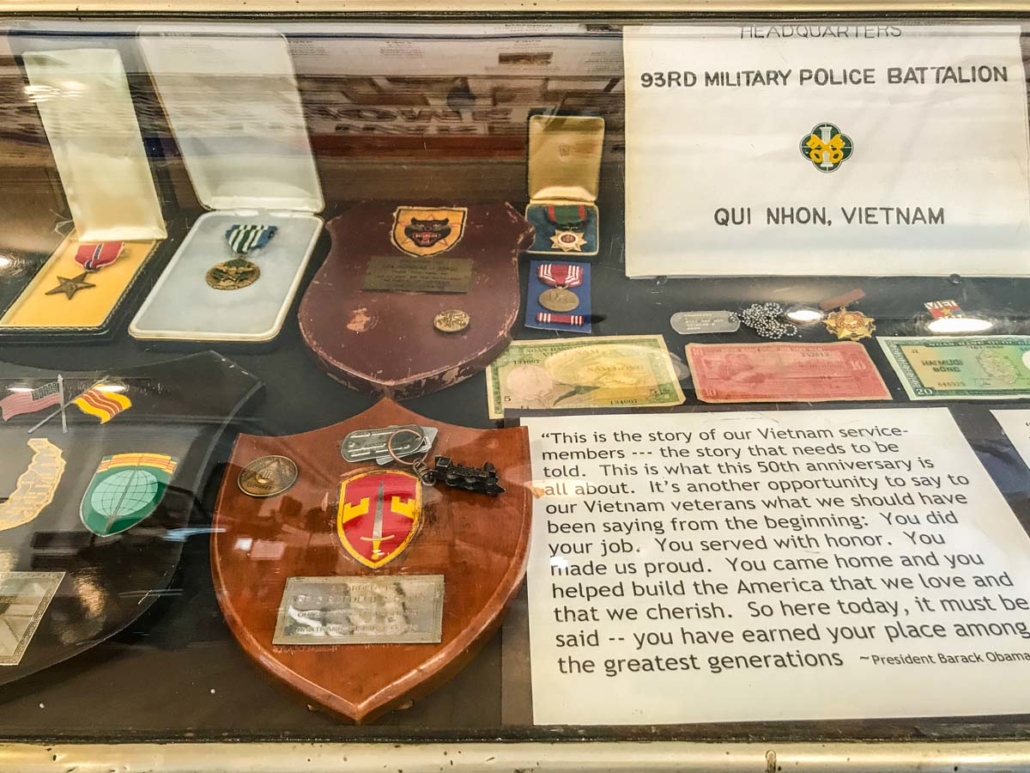
Bernard Spraker served in the 18th Military Police Brigade in Qui Nhon, Vietnam, in 1969. He wrote this for the Little Falls Historical Society.