The Little Falls Historical Society Museum

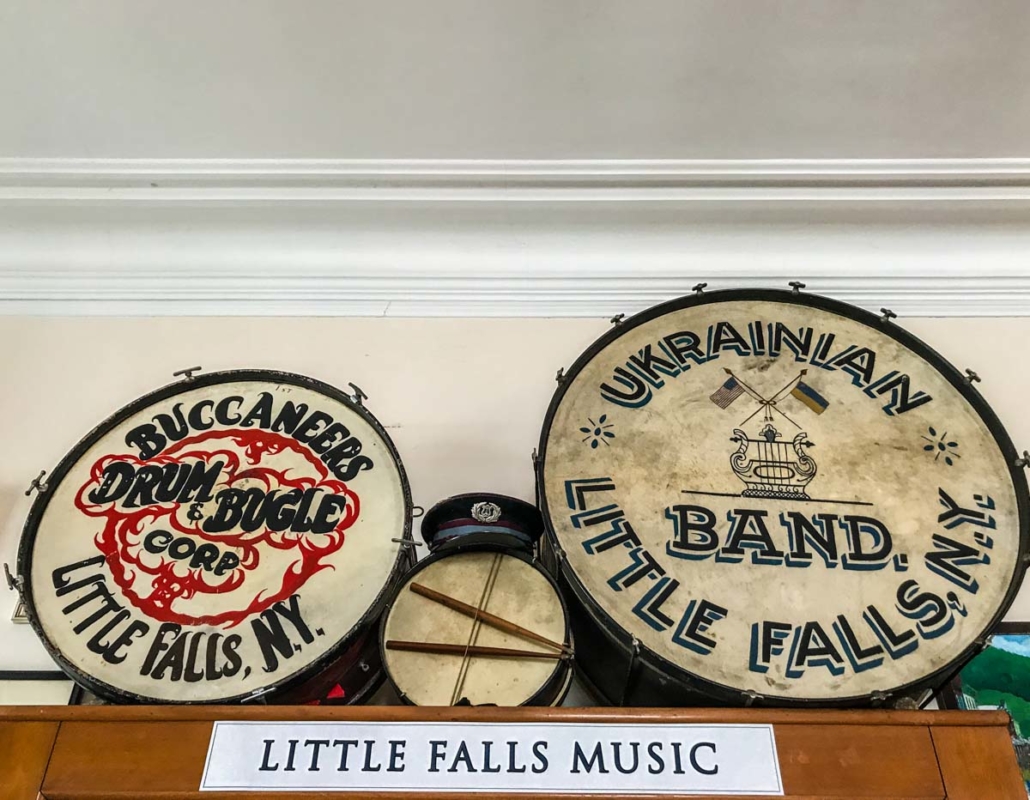
Little Falls Music Collection

The 1950s-60s brought America rock and roll, West Coast surfer music, Motown, the British invasion and later, anti-war protest and psychedelic music; local rock and roll bands provided us with an exciting “in person” ride on the same soundtrack. We owe much to these early local rockers and this is an attempt to tell their stories and ours. How did it all begin?

Little Falls Music Collection

Click on the author and title below to read the writing series articles.

In this day and age when every activity imaginable can be filmed, archived and made instantly available and when musicians routinely record their own music, it is difficult to imagine a time when great local musical performances were enjoyed by many yet went unrecorded.

Such experiences fade into memory, then just fade away all together.

The Cruisers, The Dynamics, The Five Satins, The King Beats, The Poor Side, rock and roll bands from the younger years of an aging Little Falls generation. Hank Brown’s “Twist-a-Rama” was a weekly “must watch” for many. A look back at this era is long overdue. Sit tight and remember when.

In some ways, the story of rock & roll in Little Falls begins and ends on opposite sides of West Monroe Street.

In 1955, my siblings and I were all attending Monroe Street elementary school in Little Falls. During that summer, we all participated in a talent contest at the school playground. I sang the Elvis Presley song “Heartbreak Hotel” and my brother Gary sang “The Wayward Wind.” Those playground performances earned us our first public performance at a weekly band concert in Western (Burke) Park.

Gary and I took some guitar lessons at Salvi’s Music Store, but we never got too far with that. But in 1957, a wild man named Jerry Lee Lewis came on television on the Ed Sullivan Show and blew the roof off with “Whole Lotta Shakin.” I was hooked since he was playing piano in a way I wanted to imitate. I had been taking piano lessons for years and I was ready to create my own style, so rock & roll came naturally to me. I began spending hours banging on my old upright piano singing and playing this exciting new music.

The famous movie “American Graffiti” asks the question: “where were you in ’62?”

Well, I was in my senior year at Little Falls high school and that spring Gary and I came up with the idea to form our own rock & roll band. So, I got my classmate Steve Malek to join in since Steve had studied guitar with the well-known Carmen Carmanica from Utica. Also in our first band called The Cruisers were George Gregory on drums and Lori Snyder on rhythm guitar; they were both from Little Falls. I am not sure who came up with the name The Cruisers, but it seemed to catch on.

As The Cruisers, we played our first gig at the Mohawk Valley Country Club on April 7, 1962 and a week later we played our first paid gig at the Little Falls high school gym on Main Street. We received $35 for the five of us, $7 apiece, not bad for 1962 we thought. We were an immediate success and we were on our way.

Big changes came in 1963.

There were some places that we could not play because there was no piano for me, so I became the new drummer since George had gone off to college. So too had Steve, but I was able to get a great guitarist named Tom Dobrovich who was my classmate at Utica College. Henry Dise from Little Falls joined the band as our bass guitar player and we began playing dances and clubs up and down the Valley doing all of our favorite songs of the day like “Runaround Sue” and “The Wanderer.”

In 1964, more changes occurred as Henry left the band and Gary took over playing bass guitar in addition to his front man singing duties. Also, a popular band that we admired, The Original Playboys from Utica, had  broken up and we were able to acquire their guitar player Tony Scialdone, A.K.A. Tony Troy who was also my classmate at Utica College and is still my good friend today. Tony performed in 2018 with the great musician Stevie Rigo and me at the Little Falls Historical Society Museum as part of their history of rock & roll in Little Falls exhibit. Longtime Little Falls rock and roll vocalist Mike Walo also played with Stevie and me at another Historical Society performance. We got called icons, imagine that! I digress –

Up to 1964, Gary was our main singer, but now we had four singers as Tony sang falsetto songs like “Sherry” and Tom sang beautiful ballads like “For Your Love.”

By 1965, the so-called British Invasion was in full swing so it was time for us to change our name, style and image.

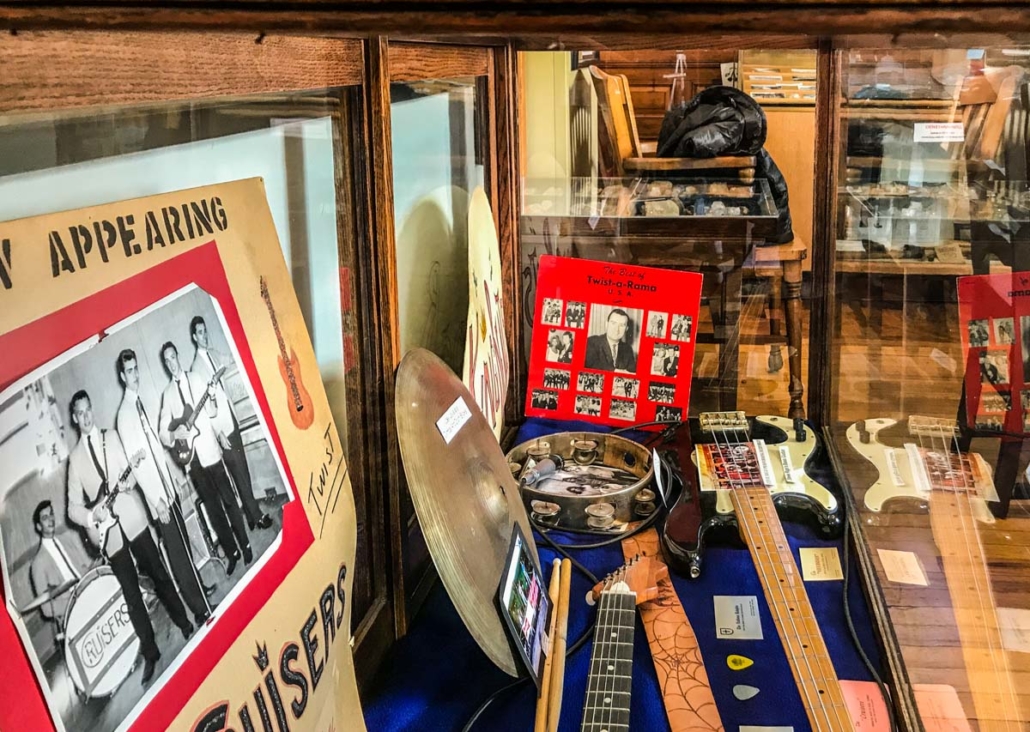
I returned to playing keyboards as I bought a portable Vox organ like the one played by The Animals so now we could play “The House of the Rising Sun” properly. We needed a new drummer and found Larry Miller from Dolgeville. Tom formed his own band and we were a quartet again. Our new name The King Beats can be seen on the drumhead in a band promo picture taken at the “castle” in Middleville.

King Beat band members in a promotional picture.

A major highlight in our musical careers was our appearance on the television show Twist-a-rama USA on September 19, 1965. It was a local dance show on Sunday mornings hosted by Hank Brown from Little Falls and featured local bands playing live. It was required to have an original song, so I wrote and we recorded a song called “Nothing About Life At All” which we performed on the show and it is on the Twist-a-rama album. The song was in the newly popular Bob Dylan style and featured me playing harmonica as well. By now we were playing places like Doyle’s Lounge in Utica and Grippe’s and Club Royale in Frankfort.

King Beat band members in a Twist-a-rama photo with host Hank Brown.

A unique feature of the band was our mode of transportation, a 1950 Cadillac hearse we bought, customized and painted gold. It turned lots of heads and got lots of attention.

Our favorite place to play was at the Sunday afternoon teen dances at the old DeCarlo-Staffo post which was located across from the fire station on William Street in Little Falls. My dad ran the door and my mom ran the refreshment stand and everyone had great fun. At one point, we had four local girls on stage as the Cruiserettes: Laura Leslie, Sherilyn Carrig, Gen Ashley and Nora Buccafurno. Also, a frequent guest was a sax player from Herkimer named Chickie Vennera who later became a Hollywood actor.

The last version of the King Beats from 1966-67 had me on organ, Gary on guitar, Roger McCabe from Utica on bass and Jim Kilts from St Johnsville on drums as Tony and Larry had left the band. 1967 was “the summer of love” when Gary and I drove the Caddy hearse to California and sold it in San Francisco. Upon returning home, I went on to teach school and Gary joined a band called the Joint Commission.

The Cruisers’ 1950 Cadillac hearse.On April 12, 1968, Gary crashed his Chevy on the Gorge View cutoff and was killed instantly, but fortunately none of his passengers were badly injured. Cruiser or King Beat no more, it was for me, and maybe all of Little Falls, the day the music died.

In 2011, a well-attended Little Falls Historical Society walking tour of Church Street cemetery  included Gary’s grave. Several people in attendance shared personal 1960’s-era rock and roll memories about Gary, the bands and the gold hearse. The Cruisers and King Beats had clearly influenced an entire generation of Little Falls people.

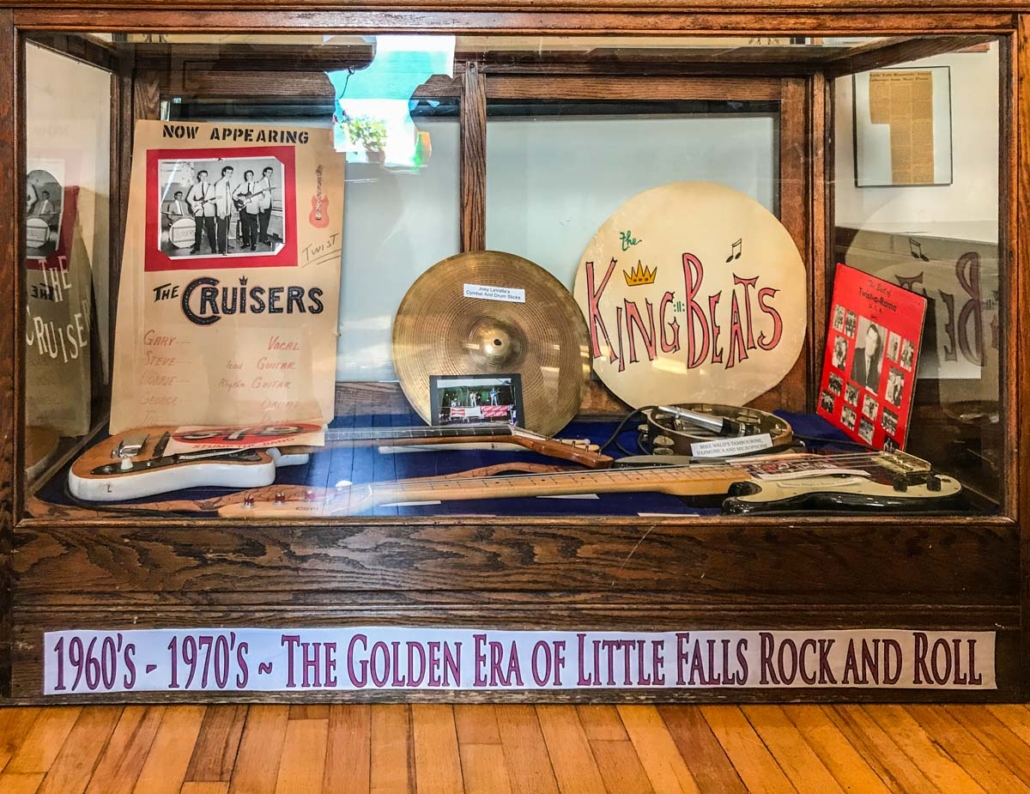
The 2017 Historical Society Old Bank Museum exhibit “the golden era of rock and roll in Little Falls” followed as did a number of articles for the Historical Society’s 2017 writing series. All of these articles can be viewed on the Historical Society’s website. A 2018 cemetery tour also included Gary’s gravesite and I was asked to speak about my brother and our band days; I was both pleased and honored to take part.

Fifty years after Gary’s death, The Cruisers’ saga had come full circle as we arrived at his gravesite  –  directly across the street from the old Monroe Street school where it all began. Rock on all Rock City Rockers!

Joe Chapadeau is a member of the Little Falls Historical Society.

It was past my bedtime on this Monday night as I write this and I am reminded of Monday evenings, long ago now, in the old Little Falls High School auditorium where the Little Falls Symphony Orchestra would rehearse.

It was always a big deal to me as a high school kid. Mr. Leon Dussault invited me to become involved when I was quite young, perhaps too young. But, Mr. Dussault seemed to know that it was the right thing, and I didn’t argue. I was absolutely thrilled to be part of the Little Falls Symphony Orchestra!

The cello section was filled with the best people from the Mohawk Valley. Mr. Dussault led the section with Mrs. Ackerman next to him. Mrs. Margaret Chase was there (her husband Mr. Austin Chase was principal violist), along with Frances Riley from Herkimer. Joe Brin and possibly Joe Quatrini had preceded me.

Mr. Dussault attracted the best people from all over the area. Those who weren’t quite sure were cajoled and persuaded until they became sold on the idea that a long drive on a wintry Monday night was just what they needed in their musical lives.

Long after Mr. Dussault passed on, a lovely reminder of his passion and commitment showed up in Wellington, New Zealand. Klaus Heymann, the founder of Naxos, had married a talented and beautiful violinist named Takako Nishizaki. The New Zealand Symphony Orchestra was doing a great deal of recording for his label at that time and often Takako would accompany him to Wellington. It just so happens that Takako was a student or recent graduate of Julliard when Mr. Dussault was able to lure her to Little Falls to solo with the Symphony. She dazzled everyone with her playing back in the 1960s. I seem to remember her playing Fritz Kreisler with us.

Mr. Dussault loved musicals and we often played popular tunes from “Oklahoma” and “The Sound of Music,” among others. I seem to recall performing with his niece Nancy Dussault on at least one occasion. But the programs were always varied and interesting and quite challenging for us to perform.

Mr. Dussault was nearing the end of his conducting days when I joined the Symphony. He needed some help on Monday nights setting up the orchestra. I considered myself most fortunate to have been called upon to help with this “chore.” He would let me in on the people who were needed for the upcoming concert and the problems that he was having with this instrument or that. How he managed for over 40 years was a miracle. He was a cultural blessing to Little Falls and his efforts were highly appreciated by the audiences and musicians alike.

I have played in the Chicago Symphony Orchestra, the Syracuse Symphony Orchestra, the Orquesta Sinfonica National in Costa Rico and the New Zealand Symphony Orchestra where I have been the Principal Cello for the past 17 years, but the best job that I ever had was with the Little Falls Symphony Orchestra from 1965 through 1970 when I went off to Northwestern University. I still miss Mr. Dussault.

Little Falls native David Chickering has been with the New Zealand Symphony Orchestra for the past 17 years. From 1965 to 1970, Chickering played in the Little Falls Symphony Orchestra under conductor Leon Dussault. This is the third article for the Little Falls Historical Society’s 2017 writing series. Other articles will follow up until and following the opening of the historical society museum on May 23. Article topics will vary, but each will relate either to the bicentennial of the 1817 groundbreaking for the Erie Canal or to the history of music in Little Falls.

Originally published in the Times Telegram April 18, 2017

During the decade 1950-1960, it wouldn’t be hyperbole to describe my hometown of Little Falls as “Music City-USA.”

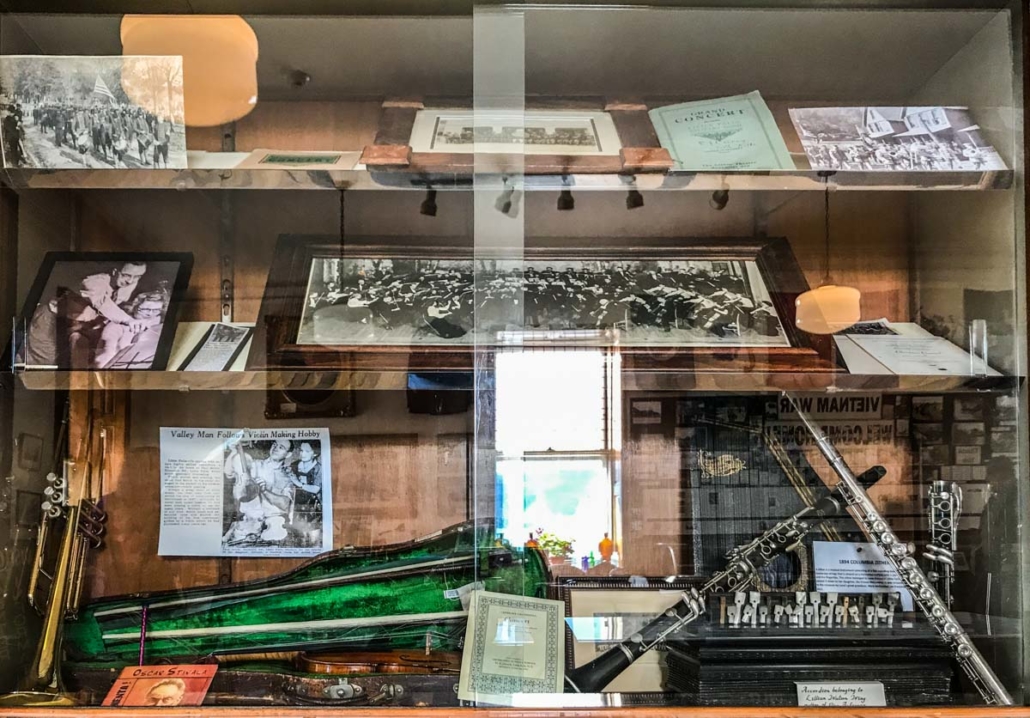
Throughout any given year, numerous concerts, recitals and parades afforded city residents an opportunity to enjoy the artistry of exceptional musicians of varying ages under the tutelage of such iconic directors as Leon Dussault, Salvi Ferraro, and Don Musella. Listeners were treated to musical selections from nearly every genre, featuring composers ranging from Beethoven to Dvorak to Sousa to Rodgers and Hammerstein to Anderson to Cole Porter and George M. Cohan.

My personal experiences during the decade cultivated in me a love of music which has made my life so much richer for the living. And I’m certain many of my musician friends back then can say the same thing.

My musical odyssey began at the age of nine when I picked as my instrument of choice the trumpet. Initially, I preferred practicing baseball over the horn. Tired of walking around the house with his fingers in his ears, my father admonished me to either take music seriously or give it up. As further incentive, he arranged for me to take private lessons from a longtime member of the city’s Slovenian Band, John Peckay. The fear of disappointing my dad and the drill sergeant methodology employed by the old Slovenian would ultimately pay dividends, the following being the first.

Each summer, the six playgrounds held talent shows with first place winners rewarded with the opportunity to play at one of the weekly band concerts held alternately at beautiful Eastern and Western Parks. I was fortunate to win one and made my musical debut with a nervous rendition of “How Much Is That Doggie in the Window.” Joining me that night were the other winners including Karen Carpenter, Alan Miles and Terry Leon. The applause had an intoxicating effect on me. After that night, I began to actually enjoy practicing.

The summer concerts performed by our Military Band were a longtime tradition attended by hundreds of residents, many in cars parked around the park – drivers beeping their horns in appreciation after each selection. The band was conducted by Salvi Ferraro and emceed by the legendary Clarence Hotaling. It was comprised of musicians from all walks of life and ages.

I joined the band when I was 14 and loved every minute of my involvement; so many great memories – Monday night rehearsals above Clemens Drug Store; Souza marches and Broadway show tunes; listening in awe to former Navy Band trumpeter Leo Potrikus warm up by playing the “Flight of the Bumblebee;” laughing at the band’s humorists Joe Vespasiano (clarinet) and “Shammy” Krchniak Sr. (tenor sax); marveling at the talent of guest singers Clara Mentis (of St. Johnsville) and Shirley Leon (Ashley).

In addition to summer concerts, the band performed in the many parades held each year. I can recall hundreds of people lining the parade route from Eastern Park to Furnace Street and back. And I’ll never forget that Fourth of July when I marched in my woolen uniform in the 90 degree heat!

Speaking of bands, thanks to a plethora of great musicians (e.g. Tito DiTata, Betsy Snyder, Frank Wnuk, Pete Adasek), Little Falls High School bands during the decade delighted locals with their performances at concerts and parades. The latter featured the “twirlings” of a drum majorette corps led by the unforgettable Sonny Follmer.

My band experiences began under the direction of Jim Buffan, and I had the good fortune to be taught by his successor, the great Don Musella, a trumpet virtuoso from Dolgeville who graduated from Fredonia State and the Eastman School of Music. Not only did he mold myself, Jim Harter, Allen Miller, Vic Leskovar, John Kaye, Pete Bambic, Jack Agati, Bob Perry and Al Kazmerski into the best trumpet section in the area, but he also honed the skills of Sam Krchniak, Jr. (alto sax), Holly Baker (oboe), Carol Busacker (clarinet). Audrey Chieka and Ginny Young (flutes), Fred LaFleur (tuba), among others.

The result was a concert band which, in 1960, earned a rare A-Plus rating at the annual New York State School Music Association competition. Musella’s musicians distinguished themselves by earning scores of medals (solos and duets) at NYSSMA festivals, performing solos at numerous concerts, and sitting first chair in many All-County and All-State Sectional bands and orchestras. The marching band was so accomplished that people attended football games to watch its halftime performances.

Musella’s Cadet Band was consistently exceptional, insuring that vacancies caused by graduation were filled without missing a beat. I was honored my senior year to be chosen to lead the Cadet Band during the Memorial Day parade, the highlight of which was stepping in my white bucks on a pile of fresh horse droppings (horses were ahead of the band and I was marching with my back to them).

Finally, as a testament to our director’s vision and the talent with which he had to work, Don formed the Metronomes, a classic dance band which played paying gigs throughout the valley (e.g. Knights of Columbus), a Dixieland band and Pep bands which kept the fans’ feet “a-tappin’” at basketball games throughout the decade.

Along with the Military and High School bands, music aficionados could enjoy performances by the High School orchestra conducted by Anson Nocera and featuring an outstanding string section (e.g. Karen Jurewicz, Martha Geisler, Al Lovenheim). Its annual Christmas concert played to a packed house.

And who can forget the Little Falls Symphony Orchestra and its renowned conductor Leon Dussault? I mean, how many small cities (population then c.9000) had a symphony orchestra? Participating in it not only introduced me to a new world of music (classical) but also provided me with an opportunity to perform “Buglers Holiday” with my heroes, Musella and Potrikus. Mary Lowenstein’s superb High School chorus and Ensembles, the countless piano recitals (e.g. Mrs. Maltby) and Halloween Minstrel Shows (pre-politically correct days), also regaled city music lovers.

For these reasons and more, it should be apparent that between 1950 and 1960, Little Falls was indeed “Music City-U.S.A.”

The other day while walking through Western Park (renamed Burke Park), I stopped by the bandstand and closed my eyes. I conjured up an image of Clarence Hotaling announcing the next number to a park filled with concert-goers. In my mind’s eye I could hear the band playing a rousing version of “Stars and Stripes Forever” and could even smell the home-made popcorn hawked by kids looking to make a few bucks. I walked on thankful for these and so many other memories held dear to this old man’s heart and for the opportunity to have been an active part of my hometown’s “Golden Decade of Music.”

Editor’s note: Ray Lenarcic is a retired Herkimer College professor. When Lenarcic was in high school he played trumpet in the Little Falls Military Band and Symphony Orchestra and in All County and Sectional All State bands for Little Falls High School. This is the fourth article for the Little Falls Historical Society’s 2017 writing series. Other articles will follow up until and following the opening of the historical society museum on May 23. Article topics will vary, but each will relate either to the centennial of the 1817 groundbreaking for the Erie Canal or to the history of music in Little Falls. The next article in the Little Falls Historical Society writing series was written by John F. Grabowski and is entitled “The Sunday Morning Polish Hour On WLFH.”

Originally published in the Times Telegram April 25, 2017

“Dzien Dobry!” That’s “good morning” in Polish! That’s the way my father, John A. Grabowski, started off his “Polish Hour” radio show in the 1950s on 1230 WLFH.

As a very young boy, I would sit next to our old RCA radio and listen, not understanding much of anything. There were no iPhones, cable, internet or iPads back then. Radio was a major way to communicate locally, even in the early days of Mohawk Valley television. Little Falls was a culturally diverse community back then. There were actually a number of ethnic radio programs throughout the Mohawk Valley that kept the locals entertained and informed. The “Polish Hour” on Sunday mornings was mostly in the Polish language, with occasional English thrown in. There were also commercial ads and announcements.

Then there were the “polkas!” A polka is basically lively dance music with a bohemian, eastern European origin. Polkas have all types of themes for weddings, birthdays, holidays and dances, something for every occasion, with the usual accordions and clarinets, a loud, lively, joyous sound!

My father played these songs from very heavy vinyl 78 RPM records from the tiny WLFH radio station on Second Street in Little Falls. The equipment he used was very basic. I recall my father telling me the headphones that I had when I was getting into stereo equipment were so much better than what the station had in the 1950s. I still have most of his program record collection … is anyone interested in giving them a good home?

The “Polish Hour” program kept the traditional music alive for the Polish community in the Mohawk Valley and passed on the sounds and language to the younger generation. Back then, there were still many older Polish people who used the mother tongue as their primary language. I must say, I now envy those who were bilingual. What rich conversations were heard on the streets of Little Falls all those years ago.

In our home, aside from reading the newspaper and watching a little television, our radio was always on, mostly tuned to WLFH. The show was a perfect addition to Sunday mornings with people attending church and then relaxing at home for the day. People followed the ethnic radio shows kind of like we do today with “Downtown Abbey” or “Breaking Bad.”

My father was also able to speak a little Italian, German and Slovak. It was all part of his being a local radio celebrity in touch with the local community. He seemed to know everyone in town. At the time, I often wondered if when I grew up I would have to know as many people.

The “Polish Hour” radio show helped to carry on the rich language and traditions of the Polish community. And, as in most cultures, music is the common thread that entertains, energizes and unites all people.

———

John Grabowski is a graduate of Little Falls High School, Class of 1968, and a member of the Little Falls Historical Society.

Originally published in the Times Telegram May 1, 2017

Published in the Times Telegram May 15, 2017

EDITOR’S NOTE: This is the first of a two-part series on the history of rock and roll in the city of Little Falls in the 1950s, 60s and 70s. The second part will cover the late 1960s and early 1970s and will appear in next Tuesday’s edition.

In this day and age when every activity imaginable can be filmed, archived and made instantly available and when musicians routinely record their own music, it is difficult to imagine a time when great local musical performances were enjoyed by many yet went unrecorded. Such experiences fade into memory, then just fade away all together.

The Cruisers, The Dynamics, The Five Satins, The King Beats, The Poor Side, rock and roll bands from the younger years of an aging Little Falls generation. Hank Brown’s “Twist-a-Rama” was a weekly “must watch” for many. A look back at this era is long overdue. Sit tight and remember when.

Dances with live bands were fixtures of teenage life in 1960s-1970s Little Falls; dances at the YMCA, Benton Hall and St. Mary’s gymnasiums, the DeCarlo-Staffo Post, the Knights of Columbus and Filipski’s Golden Pin Lanes bring back pleasant memories. It was good that our parents never quite knew all that we were up to!

The 1950s-60s brought America rock and roll, West Coast surfer music, Motown, the British invasion and later, anti-war protest and psychedelic music; local rock and roll bands provided us with an exciting “in person” ride on the same soundtrack. We owe much to these early local rockers and this is an attempt to tell their stories and ours. How did it all begin?

Perhaps it was the city’s barbers who first felt the impact of the 60s. Longer hair meant fewer haircuts. Long haired youth and a gold hearse being driven around town by the Chapadeau brothers were clear outward signs that something was different. The 60s generation was going to be noticed and heard. And nothing spoke louder than 60s music, so much different from what went before. Bob Dylan was not Elvis Presley, John Lennon was not Frank Sinatra and Mick Jagger was not Bobby Darin. But the town had no need to be nervous.

Just as 50s slang expressions nifty, greaser, outta sight and flat top gave way to groovy, hippie, laid back and guys with ponytails, so too did 50s songs. Elvis’ “You Ain’t Nothing But a Hound Dog,” the Everly Brothers’ “Wake Up Little Suzie” and The Kingston Trio’s “Tom Dooley” gave way to The Beatles’ “Love Me Do,” The Rolling Stones’ “Let’s Spend the Night Together” and Bob Dylan’s “Blowin’ in the Wind.”

Early — Mid 1960s

The allure of forming a rock band was inescapable for some. Joe and Gary Chapadeau started The Cruisers in 1962: JFK was president and the Cold War was peaking, the Vietnam War and 1960s-70s social turmoil were to follow. Joe played piano (later drums and organ), Gary sang vocals (later played bass and guitar), fellow Little Falls teenagers Steve Malek and Lorrie Snyder played guitar and George Gregory played drums. Henry Dise, Tom Dobrovich and Tony Troy played in later versions of the band.

The Cruisers covered Dion’s “Runaround Sue” and “The Wanderer,” The Four Season’s “Sherry” and other early-60s mainstay songs at area lounges and high school dances. Poor Side front man Mike Walo remembers the Chapadeaus as the local trendsetters, not only with their music, but also with their personal appearance and behavior. The Cruisers promotional pictures remain time period cool.

Local TV and radio personality Hank Brown recalls that The Cruisers “really had their act together. They used a promoter and had great advertising and they were well-organized. The kids really loved those bands.”

Although neither was as long lived as The Cruisers, The Dynamics (Bob Kaucher, Jay Love, John Sagatis and Steve Murphy) and The Five Satins (Kaucher, Sagatis, Murphy and Gene Colorito) also performed rock and roll at area venues in the early 1960s. Love went on to establish the Love Inn in 1973.

Mid-1960s Friday night dances at the Knights of Columbus and Sunday afternoon dances at the old DeCarlo-Staffo were the first exposure that many of us had to live rock and roll music. The atmosphere was exotic for young teens. A generation was just beginning to hit its individual and collective stride and rock and roll was its voice.

Chapadeau recalls that The Cruisers also at one point had “four local girls” known as the Cruiserettes (Cherilyn Carrig, Nora Buccafurno, Genevieve Ashley and Lisa Lester) performing on stage along with the band.

By 1965 the British invasion was in full swing; The Cruisers changed their image and became The King Beats; their playlist included songs by The Rolling Stones, The Dave Clark Five and The Animals. The band played their original Dylan-like song “Nothin’ About Life At All” both live on Hank Brown’s “Twist-a-Rama” and on the album “Twist-a-Rama USA.”

Taking inspiration and instruction from the Cruisers, The Poor Side began performing in 1967; Mike Walo (vocals), Bob “Chauty” Staffo (drums), David “Doc” Muller (keyboards), Bill Staffo (rhythm guitar), Vinny Pescatore (bass) and Gary Perkett (lead guitar) were the core members. Bart Carrig and Frank Scortino played guitar in later versions of the band.

The Poor Side played Sam and Dave’s “Hold On I’m Comin’,” Wilson Pickett’s “Midnight Hour” and The Doors’ “The Crystal Ship” on “Twist-a-Rama.” Richard Marocco remembers Poor Side band members as “rock stars” when being recorded for “Twist-a-Rama” at the city pool.

Around the same time, The Endless Knights (Blaise Carrig, Bart Carrig, Bill Staffo, Vinny Pescatore and Dewayne Perry) was a “garage band” managed by Gordie Ackerman. Most of these musicians later played in other groups after hitting the right chords with the Knights.

The 1967 Summer of Love and the Monterey International Pop Festival lured many to California and the musical influence of West Coast bands — Jefferson Airplane, The Grateful Dead, Big Brother and the Holding Company with Janis Joplin, Jimi Hendrix, The Doors and others — impacted a generation’s musical tastes. Local rock and rollers began covering West Coast songs. The lyrics spoke of love, rebellion and looser lifestyles.

———

Jeffrey Gressler is a member of the Little Falls Historical Society.

Originally published in the Times Telegram May 8, 2017

JEFFREY GRESSLER: 1960s-1970s Little Falls: The Golden Age of Rock and Roll

EDITOR’S NOTE: This is the second of a two-part series on the history of rock and roll in the city of Little Falls in the 1950s, 60s and 70s. The first part appeared in the May 9 edition of the Times Telegram.

The King Beats stopped performing in 1967 and The Poor Side broke up in 1968; the SPCA (Society for the Prevention of Cruelty to Asparagus) emerged. The group lured Gary Chapadeau (bass) out of musical retirement. The group also included Mike Walo, Bob Staffo Eddie Pelligrini (keyboards) and Alan Kobliha (lead guitar). The band was a fusion of rock groups; shades of Blind Faith and Derek and the Dominoes.

The SPCA’s song list included Moby Grape’s “8:05,” Cream’s “Sunshine of Your Love,” The Doors’ “Soul Kitchen,” and The Grateful Dead’s “Morning Dew.” Cutting edge and cool.

In 1968 the nation was both embroiled in the Vietnam War and grieving following the assassinations of Martin Luther King and Bobby Kennedy; locals grieved following Gary Chapadeau’s death in a car accident that same year. A musical era ended with his death.

The SPCA was gone and The Joint Commission emerged: The band featured A.J. Campione on lead guitar, Joe Janezic (keyboards), Fred “Chico” Urich (bass), Perry (drums), Bart Carrig (rhythm guitar) and Walo (vocals). Later in 1968 the personnel was trimmed to a three-piece band with Walo and Campione adding Chaut Staffo to the group, then renamed The Golden Grate. They featured songs by Cream and Hendrix. Utica’s Tony Cee Enterprises became their booking agent and a new world opened; clubs and lounges, ranging from “classy” to “scary” became their venues along with high school dances.

Psychedelic music such as Traffic’s “Dear Mr. Fantasy” was the rage and The Golden Grate’s song list included Cream’s “Toad” and Hendrix’s “Purple Haze.”

By the late-60s anti-Vietnam War music proliferated; Country Joe and the Fish’s line “One, two, three, four what are we fighting for? I don’t give a damn, the next stop is Vietnam — we’re all gonna die” was cutting edge political satire. After the May 4, 1970 deaths of four students at Kent State at the hands of Ohio National Guardsmen during a campus anti-war protest, Crosby, Stills, Nash and Young penned the song “Ohio” and its haunting refrain “four dead in Ohio” spoke to an entire generation. College campuses across the nation erupted in further protest. The Vietnam War ended LBJ’s political career and in 1969 America got Richard Nixon who later resigned in disgrace over the Watergate scandal; political upheaval was the norm.

For tens of thousands of young Americans 1969 was a pivotal year: On December 1 the first of two Vietnam War draft lotteries took place. Draft numbers often determined personal fate. Low draft numbers meant that you could be drafted and possibly sent to Vietnam, high draft numbers often translated to personal safety.

Rock and roll became more political and anti-establishment. The 1969 Woodstock Music Festival put a generation’s cultural behavior and politics on display. Richie Havens, Crosby, Stills and Nash, Jimi Hendrix, Country Joe and the Fish, Janis Joplin, The Band, The Who and The Grateful Dead all performed at Woodstock. Some embraced what they saw, others were repelled.

Walo, Staffo, Campione, Janezic, John Frazier (trumpet) and Dave Failing (saxophone) founded Your Friendly Neighborhood NARC in 1969; Chicago, Blood, Sweat and Tears, The Electric Flag and Al Kooper tunes made up their playlist.

Later that year, NARC disbanded and The Other America emerged, performing through 1971, first as a four-piece band with Walo, Staffo, Campione and Henry Verri (guitar), then adding Doc Muller (organ) and a horn section which allowed the band to cover a wider playlist, including even some Miles Davis jazz selections, as well as tunes by Traffic and Canned Heat.

Stump the Band (STB) was probably the most successful Little Falls rock band from 1974-76; the original group featured Campione, Mike Cecconi (keyboards), David “Tito” Ditata (guitar), Mark Kaucher (bass), and Jeff Mosher (drums). STB covered Cream, Elton John and Johnny and Edgar Winter. Little Falls musician Alan Brin (keyboards) joined the band in 1975. That August Ditata died in a car crash and a younger generation grieved once again.

A few months later, STB added Walo (bass, vocals, trumpet) and Anthony Vennera (keyboards) and soon was performing regularly once again, but by mid-1976, the band dissolved.

Before his tenure with STB, Brin had performed with Little Falls native Stevie Rigo (guitar) in Mooneye. Following the STB break-up, Brin and Rigo went onto what was arguably the most successful rock and roll careers of any Little Falls rock musicians. They toured nationwide and throughout Canada with the Elvis Presley Story.

Brin and Rigo then joined Daybreak. Their act included Brin fronting the band’s Jerry Lee Lewis set and Rigo fronting their Buddy Holly set. The group toured the country for several years before dissolving in the early-1980s. Brin and Rigo then joined with Alan Cancelino to form the West Albany Street Blues Band.

The true catalyst for this local rock and roll era was the willingness to teach and share. These musicians learned technique and songs from each other. The Chapadeaus inspired Poor Side band members who in turn inspired the next generation to get organized and to gain the confidence “to play out.” Mark Kaucher, Bob Willman and Richard Marocco all took guitar lessons from A.J. Campione. From that beginning, three groups, Breezin’, Rock City and Jab, evolved and performed from 1975-2015. During that long stretch, Marocco (guitar, vocals), Joe LaValla and Todd Smith (drums), Bob Willman (guitar), and Roger Marocco (harmonica) formed the core while Craig Deverereese, Paul Finch and Kaucher all played bass at different times.

BEYOND LIVE MUSIC — LOUNGE MUSIC AND RADIO

The Green Gables and Chickering’s Lounge were 1960s generational hangout bars. Chick’s was the place to meet up with friends. His Wurlitzer jukebox banged out our favorite tunes through his great Altec-Lansing speakers. The bowling machine chimed away in the background as The Chessmen’s “Louie Louie,” The Animals’ “House of the Rising Sun,” Procol Harum’s “Whiter Shade of Pale,” Janis’ “Piece of my Heart,” The Temptations “My Girl” and other favorites filled the bar and backroom with our music.

It was unfortunate that Chick’s was not set up for live music; it would have been cool to listen and dance to our music being played live by our bands in our bar.

In the early 1970s Jay Love opened the Love In and part of the social scene shifted from Main Street to Route 167. Love booked many bands, including Zoo Dirt, Rock ’N Rod and Bhang. In 1976 an outdoor multi-band music festival was held on the Love Inn grounds.

Radio helped satisfy our 1960s-70s craving for music. WLFH never quite measured up with its Top 40 format. We tuned in WTLB (Utica) and WTRY (Troy) during the daytime and to “super stations” like WLS (Chicago), WBZ (Boston), WABC (NYC) and WKBW (Buffalo) at nighttime for more cutting edge music. Buffalo Springfield, Tom Waits, The Paul Butterfield Blues Band, The Byrds, John Mayall’s Blues Breakers.

This effort would not be complete without mentioning that some of these musicians have passed away. Gary Chapadeau, Doc Muller, Gary Perkett, Tito Ditata, Al Brin, not quite Buddy, Jimi, Janis or Jim Morrison, but still rock and rollers dead before their time. You’re gonna make me lonesome when you go.

1960s-70s rock lyrics spoke to the needs and cravings of a generation. The words meant something — social justice, anti-war protest, love — and pointed the way for a generation to navigate the social turmoil.

The Baby Boom generation’s greatest lyricist and poet laureate was of course Bob Dylan. The fact that he recently received the Nobel Prize for literature speaks for itself. Has any other American songwriter ever been accorded such an honor? None. Dylan’s “Like a Rolling Stone” stands alone as a 1960s rock anthem. His music continues to be relevant and critically acclaimed.

Oldies radio stations continue to cater to our generation’s musical tastes, but we are aging. We continue to see our friends and contemporaries slip away. The Band’s seminal film “The Last Waltz” was recently re-issued on its fortieth anniversary; say it ain’t so! Where did our time go?

And in the end, it has been a pleasure to research and write this article; the stories and memories that have resurfaced are priceless. The musicians are grateful to both reconnect with one another and to have their stories written down and recorded for all to enjoy. Future generations will hopefully benefit from this collective effort. What will be their impression? That must have been a cool time to grow up. It was, we were lucky! Let it be.

Special thanks to Mike Walo, John Frazier, Joe Chapadeau, Mark Kaucher, Joe LaValla and Tom “Dewey” Dussault for their timely assistance and support for this writing project. Dewey recently passed away on April 9; his brainy wit and enduring friendship are no more; our great loss.

Please be sure to visit the Little Falls Historical Society Museum to view our 1960s-70s Little Falls rock and roll displays and our many other exhibits.

———

Jeffrey Gressler is a member of the Little Falls Historical Society.

Originally published in the Times Telegram on May 15, 2017

More people probably heard about the Endless Knights than actually heard them perform. Most of the time they played for classmates and friends in the cellar of band member Vinny Pescatore’s parents. The Knights were a true garage band that really only performed publicly a few times. Bart Carrig (lead guitar), Bill Staffo (rhythm guitar), Vinny Pescatore (bass), De Wayne “Caesar” Perry (drums) and Blaise Carrig (vocals) were band members and Gordie Ackerman was their manager. They were all members of the Little Falls High School Class of 1969.

In addition to Mr. and Mrs. Pescatore, who nourished the band with food, drink, encouragement and performance space, John Ferraro was also pivotal to the emergence of the Knights as well as other 60s-70′s teenage Little Falls rock bands.

John owned Salvi’s Music Store and he allowed young musicians to buy instruments and equipment “on time” with no down payments and only $5 or $10 weekly installments. John also went to great lengths to track down albums and song lyrics; those teenagers who he nurtured musically remember his tolerance, generosity and encouragement. He was a gem who went onto a long successful career as a music teacher at Little Falls High School.

Pescatore’s cellar was the perfect home for the Knights, it had good acoustics and enough space for all of their musical equipment and for friends to drop in and listen. The Knights felt like rock and roll kings practicing there; they were able to escape the boredom of high school life.

The Endless Knights covered songs by The Rolling Stones, Bob Dylan, The Beatles, The Byrds and other tunes played by local bands, but they tried playing them differently, often driven by their improvisational drummer Caesar Perry. The Endless Knights ventured out of their cellar home and played out a few times.

In late-1966, the Knights played a series of Sunday afternoon jams for friends, family and bar patrons in the backroom of our uncle Stuart Balderston’s John Street bar, The Globe. Their most successful performance was at the YMCA in January 1967.

By that time, Gary and Joe Chapadeau and their Cruisers band mates had become The King Beats and during a break at that January YMCA dance, the Endless Knights were invited on stage to perform. The Knights were pumped with nervous energy to perform for such a large crowd. They played “Gloria,” “Hey Joe” and “Gimme Some Lovin’” through The King Beats’ powerful sound system. The audience was impressed and much surprised by their performance.

The following month, high school friend Tom Dussault was able to get the Endless Knights hired for their next and last public performance at a well-attended dance at Benton Hall gymnasium. The crowd was large, but the Knights’ modest sound system was no match for the large space, so much different than Pescatore’s intimate cellar. The crowd had to get close to hear the music, but overall everybody had fun dancing and socializing, even though a fight broke out between alcohol-fueled gladiators. The dance left the Knights a bit disappointed in their own performance. It really was the beginning of the end for the Endless Knights.

The band went back to their cellar practice sessions, but band members began to drift apart and by spring of 1967 the band was no more. Individual Knights moved onto other bands. Bart, Caesar and Vinny helped form the Joint Commission along with Mike Walo, Joe Janezic and Fred “Chico” Urich. Billy played with several other bands and Blaise sang at a few dances with bands in need of a vocalist, including the Good Tymes with Frank Sciortino, Jimmy Muller and Alan Sefcik. Gordie played drums in one incarnation of The Poor Side along with Allen Syneki, David “Doc” Muller, Frank Sciortino and Vinny Pescatore.

At Gordie and Gina Ackerman’s 1981 wedding reception at the Little Falls Masonic Temple, A.J. Campione (lead guitar), Chico (bass), Gordie (drums) and Blaise (vocals) fired up the crowd with rock tunes, including Jimi Hendrix and Rolling Stones songs; one last encore for the Endless Knights!

The whole Endless Knights experience really was about a group of Little Falls youth being “electrified” with musical instruments and equipment to become part of the 60s pop culture of experimentation, rebellion and non-conformity. Their two-year run was driven by the sheer joy of playing rock music together. By the mid-60s, the rock and roll music scene had exploded and an entire generation of local teens rode that wave. Music was the vehicle.

The Little Falls 1960s-70s rock scene was about friendship and camaraderie helped along by nurturing adults like John Ferraro and the Pescatore family. Music united a group of high school students in friendship, endlessly.

Everyone is invited to visit the Little Falls Historical Society Museum at the corner of Albany and South Ann streets to view the 1960s–70s Golden Age of Little Falls Rock and Roll exhibit. The historical society’s two main 2017 exhibit themes are the history of music in Little Falls and the bicentennial of the 1811 ground-breaking for the Erie Canal.

———

Bart Carrig and Blaise Carrig, members of the Little Falls High School Class of 1969.

Originally published in the Times Telegram June 12, 2017

In 1968 a huge transformation took place in the rock music industry with the advent of the “horn” bands. Mike Bloomfield’s Electric Flag released their first album, “A Long Time Comin’,” and Al Kooper’s Blood, Sweat & Tears released their first album, “Child Is Father To The Man.” These were soon followed by the band (and album) Chicago Transit Authority, who were forced to shorten their name to Chicago. Soon other bands like the Stones, The Doors, The Who and others were adding horns to their arrangements. Still others, namely Procol Harum and The Moody Blues, began touring and recording backed by symphony orchestras.

In the meantime, rock music continued in the Rock City. While power trios like Cream and The Jimi Hendrix Experience had been driving forces in the rock industry, The Golden Grate was entertaining local crowds by covering songs by these artists, as well as others, such as The Doors and The Who. However, with the emergence of the horn bands, The Golden Grate re-formed as Your Friendly Neighborhood NARC. Cream had recently disbanded, so the band cleverly came up with a play on words with the National Association for the Resurrection of Cream.

In forming NARC, the new group consisted of the members of The Golden Grate, which included Mike Walo on bass and vocals, A. J. Campione on lead guitar and Bob Staffo on drums and vocals. Horn players were difficult to find. The band had gone through Little Falls High School yearbooks looking for trumpet and sax players who were still living in the area and rock-oriented, but none were to be found. John Frazier had played French horn in high school, so when he asked about joining the band, he told the band members he would have to learn new fingerings for the trumpet. Dave Failing from St. Johnsville was recruited on tenor sax, and the addition of Joe Janezic on organ rounded out the band. The addition of the keyboards and horns allowed the band to continue playing many of the crowd favorites from Cream and Hendrix, as well as expand into material from Blood, Sweat and Tears, Electric Flag, John Mayall, The Beatles, Ten Years After, Canned Heat, Traffic and The Doors. It was an eclectic mixture of music for sure!

NARC was a vanguard in the local music scene; far ahead of its time. There was only one other horn band in upstate New York at the time, so under the management of Utica’s Tony Cee, the band got bookings from as far east as Albany to almost the Canadian border in Ogdensburg. Having the musical capabilities to play the intricate arrangements of Hendrix as well as Blood, Sweat & Tears, the band also found the balance to play songs that were popular at the time and people could dance to.

Like all good things, the band came to an end. Bookings were difficult to come by, and some band members went their separate ways. Not long after, another horn band, The Other America, took NARC’s place, and Rock City rocked on.

John Frazier is a member of the Little Falls Historical Society. This story is part of the historical society’s writing series on the history of rock and roll in the city of Little Falls.

Stump the Band was a rock band formed in Little Falls during 1974. The band was brought to life by four Herkimer County Community College students who were also graduates of the Little Falls High School Class of 1973, another HCCC student who was a graduate of the LFHS Class of 1969 and a professional electrician from Dolgeville.

1974-1976

A.J. Campione (guitar and vocals) was the senior member of the band and had considerable performing experience with other Little Falls-area rock bands since the late-1960s. Among them were The Other America, The Joint Commission, N.A.R.C. and The Golden Grate.

Jeffrey Mosher (drums and vocals), an electrician by trade, was also a senior member of the band having considerable performing experience with high school jazz and orchestral units.

Michael Cecconi (keyboards and vocals), an HCCC student, was a classically-trained pianist and had performing experience with Jim Deverese and the Country Swingers.

David “Tito” Ditata (guitar and vocals), an HCCC student, had been playing guitar for several years and had performing experience with The Night Lights.

Mark Kaucher (bass and vocals), an HCCC student, had performing experience with the high school jazz band and also with Jim Deverese and the Country Swingers.

Initial discussions for the idea of assembling a band started during spring sessions at HCCC. By mid-summer, the musicians started assembling at the garage of the James Campione residence on Monroe Street, much to the mixed reception of nearby city dwellers. Later in the summer, the band moved to the garage of the Joseph Kaucher residence on Paines Hollow Road, which due to its more rural setting, helped reduce the aural impact of the band’s developing sound.

By mid-autumn, the band was finally ready to go public with its own mix of then popular, primarily dance-orientated, rock music. Some of the recording artists covered by the band were Elton John, Cream, Grand Funk, Peter Frampton, Ohio Players, Johnny and Edgar Winter, Styx, Average White Band, Uriah Heep, Bad Company, Earth, Wind and Fire, Doobie Brothers, etc.

For its name, the band settled on Stump the Band, which at the time, was the name of a popular skit between Johnny Carson, band leader Doc Severinson and the studio audience on NBC television’s “Tonight Show.” In the group’s case, it was a reference to its diverse repertoire mix.

STB started performing frequently —sometimes several nights per week — throughout the Mohawk Valley, and became a regular at a number of bars and the high school and college dance circuit. By winter 1974-1975, STB had built a solid reputation as a dance and party band and the demand for its services increased rapidly.

One result of the busy, often week-night gigging, HCCC student/player grade point averages suffered proportionally. Michael Cecconi departed STB several months later.

Allan Brin (keyboards and vocals), another LFHS Class of 1973 graduate and HCCC student, joined the band in the spring of 1975. Brin was also a classically trained pianist.

In August of 1975, several days after a two-night engagement at the Outside Inn in Norwich, tragedy struck: Founding STB guitarist David “Tito” Ditata was killed in a single vehicle automobile crash. Everyone who knew him was devastated. STB ground to a halt, with its future unsure.

During the preceding nine months, STB had performed 92 shows in venues such as Love Inn in Little Falls; Four Acres in Utica; JJ’s in Rome; Coalyard in Mohawk; Oasis in Westmoreland; 3 Pines in Canastota; Livingston’s Ale House in Kirkland; Buckland’s in Oswego; Grand Ma’s in Oneonta; Grand Hotel in Rome; Orange Monkey in Rochester; Lake Shore in Sylvan Beach and numerous high schools and colleges. Road crew assistants at various times included Mark Drapalski, Joe LaValla, Rich McLaughlin and Rich Milnar.

1975-1976

Following the tragic loss of one of its key founding members, surviving STB members, Campione, Mosher and Kaucher, took some time to contemplate whether or not to continue, and if they did, on what path.

At this point, two veteran area musicians arrived in the STB sphere.

Michel Walo (bass, trumpet and vocals) was a LFHS Class of 1967 graduate who had considerable performing credentials in the region. He had been a member of a number of Little Falls-based bands such as The Joint Commission, Poor Side, Golden Grate, N.A.R.C and The Other America.

Anthony Vennera (keyboards, trumpet and vocals) hailed from Herkimer and had performed with several bands based in the village, including The Wall, Krazy Horse and Death Watch.

The decision was made to continue on with STB, but with some slight tweaks to the musical presentation. Due to the fact that Kaucher and Walo were multi-instrumentalists — Kaucher on bass and rhythm guitar and Walo on bass, trumpet and percussion — the band expanded to include covers of performers like Jeff Beck, Sly and the Family Stone, The Bee Gees and Stevie Wonder. By October, STB Version 2.0 was back to its regular, several nights per-week performance schedule at all of the familiar venues and some new ones.

Ultimately, as is the norm with most rock bands, things come to an end in the world as they know it. Some members seek greener musical pastures (musical differences) or simply refuge (rehab) from the scene. By mid-1976, Stump the Band had come to that point. The band was stumped.

———

Mark Kaucher wrote this for the Little Falls Historical Society in memory of former band members David Ditata and Allan Brin.

During the mid to late 1960’s, the local music scene in Little Falls was very active and was definitely keeping pace with the trends, fashions, and sounds of the times. “The Poor Side” was one of the first local “garage bands” in Little Falls and we did our part in keeping that part of the music movement alive.

The band began jamming in Vinny Pescatore’s family’s living room on Loomis Street in Little Falls playing along with 1960’s Rock ‘N Roll classics. During those sessions the founding members caught the music bug for good. The group took its name from the Johnny Rivers song “Poor Side of Town.”

The members of the band were:

  • Vocals: Mike Walo
  • Keyboards: David “Doc” Muller
  • Lead Guitar/Vocals: Gary Perkett / Bart Carrig / Frank Scortino
  • Rhythm Guitar/Vocals: Bill Staffo
  • Drums/Vocals: Bob Staffo
  • Bass Guitar: Vinny Pescatore

During the tenure of The Poor Side the age of the band members was between 15 and 18 years old so we were limited to playing places that didn’t serve alcohol.  Those venues were mostly high school dances up and down the Mohawk Valley, events at the YMCA, restaurant openings, battle of the bands competitions, local fairs and field days, WKTV’s Twist-A-Rama TV show, showcases at the Rialto Theater, birthday parties …etc. You name it, we played it.

Actually, the band liked to play anywhere that would have us, but as far as specific venues are concerned, the most memorable jobs we played were at the Rialto Theater because of its great elevated stage, fantastic acoustics, and theater seating. Also memorable was appearing three times on the Twist-A-Rama TV show broadcast on WKTV in Utica because of the excitement of being on live TV and being introduced by local celebrity Hank Brown. The Poor Side’s appearance at the live show broadcast on location from the Little Falls Municipal Swimming Pool in 1967 was also a big gig for the band!!!

Like 99% of the early Rock and Roll groups during those early days, The Poor Side was what is known as a “cover band.”

That meant we “covered” or copied the popular songs of the day and tried to make them sound as close to the record as possible. The song list was a living thing and changed frequently depending on what the most popular tunes were during that week or month. Songs the audiences liked hearing were tunes they could dance to and recognized from the radio. A couple of memorable tunes from those years were “Incense and Peppermints” by The Strawberry Alarm Clock and “Light My Fire” by the Doors. They were always crowd favorites because our classically-trained keyboard player David “Doc” Muller always nailed the organ parts on his Vox Super-Continental and played them exactly like the records.

Probably the most memorable audience response we had was in 1967 when we played “I Think We’re Alone Now” by Tommy James & the Shondells five times at a dance in the LFHS gym. The song had just come out and was a major hit and the audience couldn’t get enough of it. Fortunately, because of Gary Perkett’s excellent ear for recognizing chord changes, we learned the song the day before the dance and played it just like the record every time!!

Our inspirations locally were of course The Cruisers / King Beats because they were Little Falls based and played in places where we as teenagers could see them.  Without the influence of Joe and Gary Chapadeau, we would not have had local musical mentors. On a larger scale, however, there were lots of bands breaking on a national and world-wide scale at that time that also helped influence our musical tastes, our choice of instruments, and our appearance from clothing to hairstyles. Those groups included The Beatles, The Doors, The Who, The Animals, The Rascals and various Motown acts.

All of the band’s gigs were fun.

When you’re doing something you really enjoy, it’s all good. Some of the best memories were playing requests and seeing the smiles on the faces of the dancers when they were grooving to their favorite songs. Other not so pleasant memories had to do with lugging all those heavy amplifiers, drums, organs and guitars up numerous flights of stairs to get to the venue and then back down when we were done playing. The most difficult climbs were the Little Falls High School Gym, St. Mary’s Academy Gym, and the Little Falls YMCA front steps.

A few odds and ends:  Starting and playing in a band during those days was totally unknown territory:

  • Getting started as a group was brand new because there was no precedent for teenagers getting together with a common purpose of playing Rock ‘N Roll.
  • Learning songs was a problem because records were not always available and when they were, buying 45’s and albums was expensive. Passing them back and forth among group members was not an efficient way to learn individual parts.  There were no cassettes, mp3’s or You Tube.
  • Getting venues to play was always a challenge because we didn’t know how to go about booking jobs, getting paid or having a manager.

To date we have lost three members of The Poor Side:

  • Vinny Pescatore, whose drive and perseverance along with the support of his father and mother were key elements in keeping the band focused and grounded.
  • David (Doc) Muller, whose keyboard skills contributed to the recognizable tone of many songs that helped define The Poor Side’s signature sound.
  • Gary Perkett who brought a level professionalism and guitar technique to the group that helped propel us to the next level.

We miss them all.

Mike Walo is a member of the Little Falls Historical Society

Nearly five decades have passed since I played drums in The Joint Commission and, sadly, many of my memories of that experience have naturally faded away with the passage of time. It’s not that I haven’t tried calling some of them back from obscurity, but there is little to be found in the way of photographs or other documentation of the band’s history. I have however recently had the great pleasure of recounting times in The Joint Commission in telephone conversations with A.J. Campione, our virtuoso lead guitarist, and Fred “Chico” Urich, our capable bassist. I’ve had only a very brief conversation with Mike Walo, our vocalist and sometime rhythm guitarist, and have managed merely to exchange a couple voicemail messages with Bart Carrig, our other rhythm guitarist. It grieves me deeply to add I’ve found no trace of our brilliant keyboardist, Joe “Scoop” Janezic.

All that said, certain images of my association with that band remain immutable among my most treasured recollections, and it is no exaggeration to assert that, though I did not realize it at the time, my lifelong love of blues and jazz found much of its roots in The Joint Commission’s repertoire. Our song list consisted of what then was called “underground rock” because very little if any of it made its way to the Top-40 list or received any commercial radio play, at least not until much later than we first heard and sought to emulate it. Gary and Joe Chapadeau, two of our important musical mentors, introduced much of that music to us. A year or so before our inception, they returned from their pilgrimage to The Summer of Love in San Francisco bearing 33⅓ LP recordings of, among others, such illustrious artists as The Grateful Dead, Big Brother and The Holding Company with Janis Joplin, The Jimi Hendrix Experience, Cream and, still among my very favorites, The Electric Flag.

In my view, A.J. and Joe were the heart and soul of The Joint Commission. Without them, the band could not have existed in any form other than perhaps name. Although I don’t recall our employing such terms in those days, they for all practical purposes served jointly as our musical directors and arrangers. Since charts of the songs we played were either unattainable or, more likely, non-existent, Joe, armed with only a legal pad and pencil, ingeniously ferreted out the chord changes and melody lines while listening to the LPs on a portable Victrola. Only occasionally did he check them for accuracy on his keyboard. It wasn’t necessary. The cat had the ears of an elephant.

It can also be said that few if any other guitarists we knew beside A.J. could begin to handle those difficult lead passages laid down by the likes of Hendrix, Clapton, and Garcia. While no one in the band bore the title of leader, it was A.J. and Joe who illuminated our path toward replicating those tunes in acceptable form.

To cite an example of this, I don’t recall our ever daring to perform Manic Depression from the Are You Experienced album in public, but I clearly remember our earnest attempts to learn the tune. Joe and A.J., of course, had their parts down tight as the head on my snare drum, and Chico laid out the baseline in impeccable time. I simply struggled, absent the chops to form the subtly nuanced syncopations and beautifully textured paradiddles underlying Mitch Mitchell’s flawless execution of the song.

“No,” Joe patiently admonished me. “It’s not a four-four, Caesar (that’s what most everybody there called me back then). It’s a waltz. A fast one. Like this: 1-2-3. 1-2-3, 1-2-3,” he said, counting it out while snapping the ones on fingers held high above his ear. A waltz? What self-respecting rock musicians play waltzes? Of course he was exactly correct and, though I was insufficiently experienced to pick up on that obvious fact, I knew I was hearing and trying to play something that resonated within me from my toes to the upper limits of my head, from which I simply could not exorcise the thing. It just kept dancing around in there: 1-2-3. 1-2-3, 1-2-3.

With perfect grace and precision, Redding walked that base line like a razor-thin high-wire. Around his soulful, plaintive phrasings of the lyrics, Jimi sent his lead guitar riffs out in sheet-after-sheet of broad, dense, contra-rhythmic bluesiness, often traversing multiple measures but never failing perfect resolution. They descended upon the underlying pulse of the composition like dark, brooding clouds hovering over a fitfully animated (dare I say manic?) sea, constantly churned by that phenomenal rhythm section comprised of only Redding and Mitchell, and sounding like an ensemble of threefold as many. And Mitchell! My God! His comping of Jimi, though always held sensitively just underneath him, was a seamlessly continuous, brilliantly articulated solo in its own right. Those cats were swinging! And in three-quarter time, no less!

It must have been some years hence, I don’t recall just when, that the epiphany of what I gained from the experience of attempting Manic Depression came to full light in me. True, it was a humbling but healthy revelation of my woefully deficient chops. But it was also the earliest stirrings of my abiding love of jazz. Never do I hear (or am so fortunate to play) those marvelous, up-tempo waltzes in Coltrane’s rendition of My Favorite Things, Wayne Shorter’s Footprints, Chic Corea’s Windows and, of course, Miles’ All Blues, but that I can see Joe flashing that toothy smile from ear-to-ear, and hear him counting out those threes while snapping his fingers squarely on the apex of the ones. And always I hear then, if just for a brief moment, the opening measures of Manic Depression.

Dick “Feldy” Feldmeier, a loyal friend and fan of The Joint Commission, would also have been a wealth of information regarding its history. But we’ve long since lost him to that great concert hall in Rock ‘n Roll heaven exclusively reserved for the genre’s most faithful and devoted disciples. In addition to his generous friendship, Feldy, along with the Chapadeau brothers, also played a profound role in influencing who we listened to and, by extension, what we sought to play. His legendary cellar parties invariably involved introductions to “underground” bands most of the revelers in attendance had never before heard of. All during those momentous events, he served up lush portions of that exquisite ear candy on vinyl LPs (contraband procured in such exotic places as musty, subterranean record shops down in Greenwich Village) spun on his family’s expensive, high-fidelity stereo system.

While having a wonderful time, all the attendees of those occasions were being exposed to the emergence of nothing less than an all-out revolution in popular, as well as not-so-popular “youth music.” But that, as much of the music reflected, was by no means the only revolution under way. The civil rights movement, the women’s movement, the anti- (Viet Nam) war movement, the sexual revolution, the so-called “generation gap,” and the emergence of the “hippie drug culture” were all swelling and converging like some monstrous tsunami. It was a time of confusion, contention, and chaos and, though fallout from nearly every aspect of that crept and sometimes charged into the song lyrics, for me, as I believe it was for the other members of the band, it was always preeminently about the music. The music provided a refuge, a place of beauty and hope amidst fear, ugliness, and despair. And we immersed ourselves in it with full, unwavering devotion.

I can’t say for certain which of us originally spawned the idea for the band, but I believe it was Bart who came up with the cleverly whimsical, double entendre name. It’s spot-on appropriateness left little room for dissent, and there was none. I’d venture, too, that our early organizational meetings occurred somewhere in the vicinity of the lower southeast corner of the no longer present Shopper’s Square, right across from what was then Saint Joseph’s Catholic Church and now is the Community Co-op. I believe this is likely since Adam’s Pool Hall and Dandee Donuts [sic], both located there then, jointly served the better part of Little Falls teens’ social impulses as well as their lust for the vices of billiards and every variety of pimple fertilizing junk food imaginable. Such venues, common in large and small towns everywhere alike back then, I suspect are now all but supplanted by electronic communication devices and the various social media and other applications that run upon them. We, of course, did have telephones at home, but they did not afford the opportunity to don or view the current fashions, their use carried the risk of parental eavesdropping and, while talking on them, you couldn’t very well smoke cigarettes without getting caught.

Due largely to his rigorous practice regimen (with maybe a dash of parental forbiddance thrown in), A.J. did not frequent those venues nearly as much as did the rest of us. But it was probably at one or the other of them that he delivered the much-welcome news that his brother-in-law, Ron DePiazza, as a favor to A.J.’s father, had very generously offered to us as a practice studio the space above Sam’s Super Service, his auto repair establishment. This speaks very loudly of the measure of support A.J., and we as his bandmates, received from his family. We were entitled to use it at no charge until Mr. DePiazza got it leased out to somebody and, fortunately for us if not for him, the market for retail space at that time in Little Falls may as well have descended into the sewers. “The Place,” as we came to call it, now occupied by Yoga and Wellness, was warm and secure, and we could leave all our equipment assembled there, thus avoiding lengthy set-ups and teardowns before and after rehearsals. This afforded precious time for running through another tune or two in the course of a session, precluded our having to impose on our parents to host practice sessions in their homes, and relieved us of the burden of lugging our equipment all over town. It provided much more, however, than all those many practical comforts and conveniences. For me it was a temple, a shrine, wherein the music was the object of our adoration and in which we prepared for our first communion with an audience.

That occurred on a muggy, late-spring Friday evening in the third-floor gymnasium/auditorium at Saint Mary’s Academy. By the time we lugged Joe’s bulky, wood-cased keyboard, the amplifiers, and all the rest of our equipment up those three flights of stairs, we were panting and sweating like we’d just run a marathon. Among the equipment was a makeshift strobe-light Chico and his dad fashioned from a circular piece of corrugated cardboard about five feet in diameter, with a thin slot cut into it, and fixed to an old washing machine motor, behind which was propped a 150-watt floodlight. We set up on the stage and I remember somebody remarking, “Get used to it guys. Next stop is the Ed Sullivan Show,” and somebody else there with us, probably Gordie Ackerman, immediately dropped into his Ed Sullivan imitation, the humor of that providing a much-needed, if insufficient, easing of our nervous tension.

Having set up our equipment and completed our sound check, we watched from one of the third-story windows a promising crowd forming on the sidewalk down in front of the main entrance. Perhaps inspired by the Ed Sullivan imitation, someone suggested we turn the gymnasium lights down as far as possible without arousing the nuns’ suspicions, close the stage curtains, start the strobe-light and, when most of the attendees had filed into the gym, slowly draw the curtains open as we embarked on our first tune of the evening: Purple Haze. Joe led us into the piece and, as the curtains rolled open, the strobe light so blinded me I could only imagine the effect on the audience and the chaperoning nuns.

We were well into the second chorus before my vision adjusted sufficiently to see that nobody danced. It wasn’t their shyness. The audience crowded tightly around the stage, eyes wide and jaws hanging open, having no clear idea what possible role the gyrations of their bodies might play in such an outrageous display of audacity. I didn’t know what to think, but the applause following Purple Haze had not begun to subside before Joe took us right into Fire, followed closely thereafter by Foxy Lady. By then we were breathless and the energy in that gymnasium was more than palpable and, when he called out The Wind Cries Mary, I guessed he thought we needed a “slow one” as much or more than did the audience and the nuns. The whole affair was like an out of body experience, and it was the only gig at Saint Mary’s we were ever again invited to play.

We continued rehearsing and, with much effort, managed to score engagements at the Little Falls High School, the YMCA, and a few other places before landing a gig for a Saint Johnsville High School dance. Our day in the sun had arrived. We were going on the road, albeit for a single performance not ten miles away that paid hardly enough to cover the cost of getting there and back. I had long since forgotten this adventure but, as Chico reminded me in our recent telephone conversation, it did not fare well. For the first and only time we were heckled and booed and, were it not for the merciful intervention of the chaperons, we might well have been tarred, feathered, and run back to Little Falls on one of the rails of the New York Central System.

“What happened? Were we lousy that night?” I asked.

“No, no, no,” Chico replied. “Nothing like that. I thought we played as good or better than ever.”

“Were the acoustics bad?”

“No. Just fine.”

“Well, what happened then?”

“We didn’t perform any Top 10. They were mad because they couldn’t recognize a single song we played.”

So there it was. Avant-garde is never easy. But, selfless and devoted artists that we were, we took it all in philosophical stride, returned to the refuge of The Place, and sought solace in six-packs of Genessee and what we naively (though deliciously) believed was our woefully misunderstood and wrongly persecuted bohemianism.

When I spoke with A.J. a few weeks back, he confessed to forgetting this incident too, then promptly turned to reminiscing about what we agreed was a profound, though subtle sub-textual element at play in our experience in The Joint Commission. Without fully appreciating it at the time, in what we listened to and endeavored to play, we were being introduced to that uniquely American musical art form called The Blues, delivered to us largely by way of England via such luminaries as The Rolling Stones, Cream and, of course, The Jimi Hendrix Experience, to name only a few. Elements of bluegrass came to us by way of Crosby, Stills and Nash, The Grateful Dead, and Moby Grape. And samplers of jazz came via The Electric Flag, Blood, Sweat and Tears and, somewhat later, jazz-rock fusion groups such as Weather Report and The Yellow Jackets. Even country music played a role, as certainly did folk (one had to be living under a rock not to have been blown away by the likes of Bob Dylan and Joan Baez).

What was commonly referred to simply as Rock ‘n Roll back then was in fact a rich smorgasbord of several musical art forms, many having long-established roots in the American Deep South, Appalachia, Memphis, Nashville, Chicago, Detroit, Kansas City, New York City, and so forth. That The Electric Flag subtitled their first album An American Music Band was entirely accurate and appropriate. On their A Long Time Comin’ album, one can hear a perfect example of Chicago-style twelve-bar blues, replete with a full horn section (including bari-sax), in their rendition of Texas and, on the An American Music Band album, a beautifully construed jazz ballad, in which the vocalist is supported by wonderfully delicate and haunting piano comps, in My Woman That Hangs Around the House. The Joint Commission was born and lived its short life in the midst of an incredibly rich and diverse musical milieu, and I am eternally grateful to have been a part of that.

I’ve played in quite a few bands in several places around the country through the years, and still play from time-to-time though, anymore, only in small jazz ensembles or the occasional blues combo. I’m drawn to the fellowship of musicians as much as to the music. Small bands, in my experience, form a sort of perfect, microcosmic democracy. Their participants must master the rules before venturing to break them, and show plausible cause when they do. Players must listen attentively to one another, never speak out of turn and, when speaking, must say something meaningful and useful that genuinely serves the whole endeavor. While one or more of the players may fulfill the role of arranger or musical director, bosses are unnecessary. And unwanted. Everybody knows their part and does their job.

Though we maybe only understood that intuitively, perhaps instinctively, this was no less true in The Joint Commission than any of the finest groups I’ve ever had the honor of playing in. It was a thoroughly wonderful privilege and pleasure. And what a thrill it would be, should we be so lucky to find Joe, to get together once more and undertake a reunion performance. Should such a sacred event ever occur, perhaps I might be extended the chance for absolution by holding up my end of the bargain in Manic Depression.